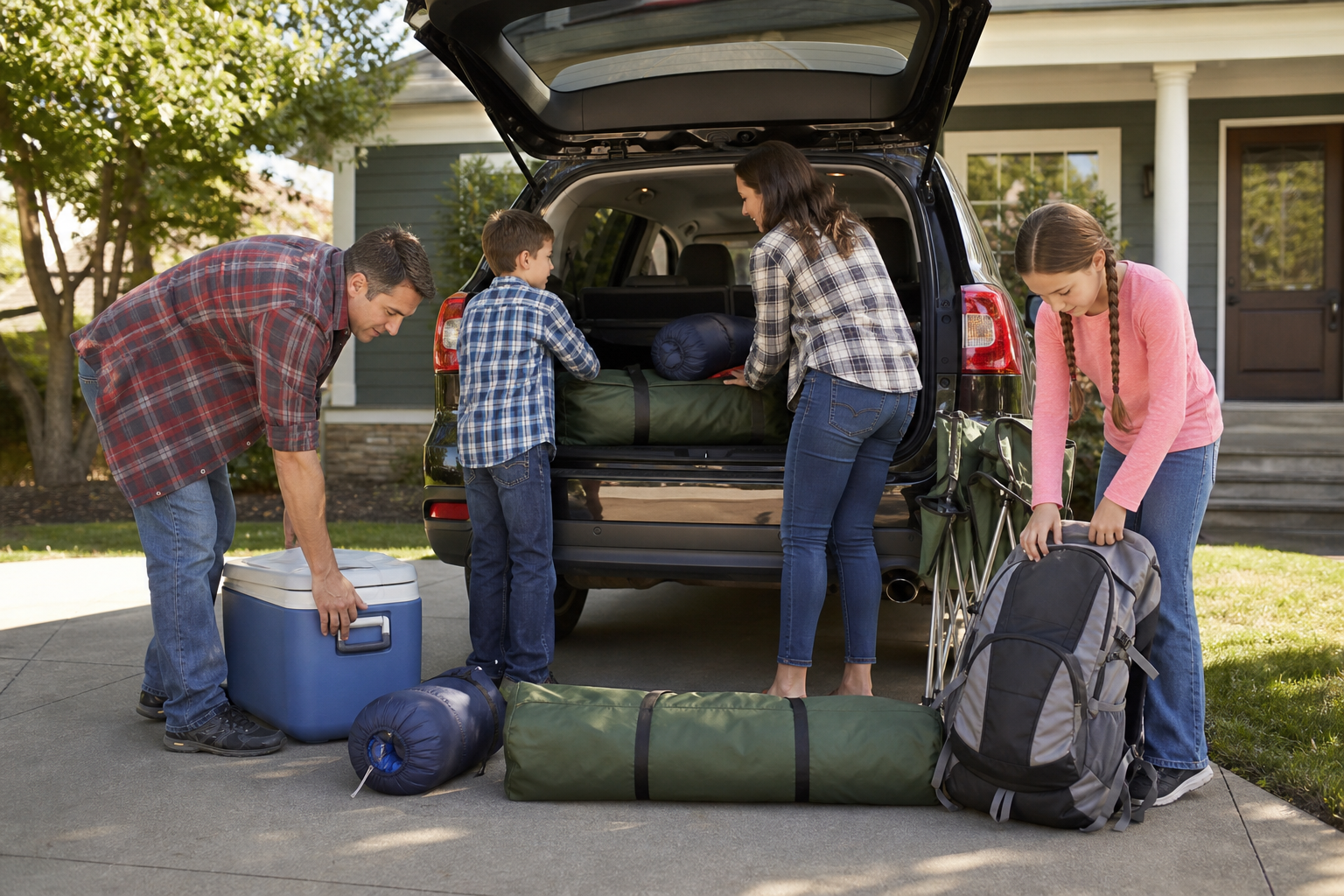

Nothing takes the fun out of a family camping trip faster than realizing you left the sleeping bags in the garage. Between juggling kids, pets, coolers, and campsite gear, it is easy to forget something important.
A solid packing checklist keeps your family organized, reduces stress on departure day, and makes sure you actually enjoy the trip instead of scrambling to replace forgotten essentials. Whether you are tent camping for the first time or loading up the RV for a full weekend at one of the Happy Grounds campgrounds across New England and New York, this list has you covered.
Camping with kids takes more planning than a solo trip or a couples getaway. You are packing for multiple people with different needs, from toddlers who need comfort items and diapers to teenagers who want fishing rods and Bluetooth speakers. Temperatures across New England and upstate New York campgrounds can swing 30 degrees between a warm afternoon and a chilly morning, which means clothing layers matter more than most families expect. And if you are pulling into a campground with an RV or travel trailer, your gear list gets even longer with leveling blocks, sewer hoses, and surge protectors.
This checklist breaks everything down into categories so you can pack section by section instead of wandering through the house hoping you remember everything. Each section covers exactly what your family needs, from shelter and kitchen gear to kid-specific items and entertainment. Scroll through the full list below, or download the printable PDF version and check items off as they go into the car.
Book your next family camping weekend at Happy Grounds.
Shelter and Sleeping Gear
Your shelter setup determines how comfortable your family sleeps, and good sleep makes or breaks a camping trip with kids.
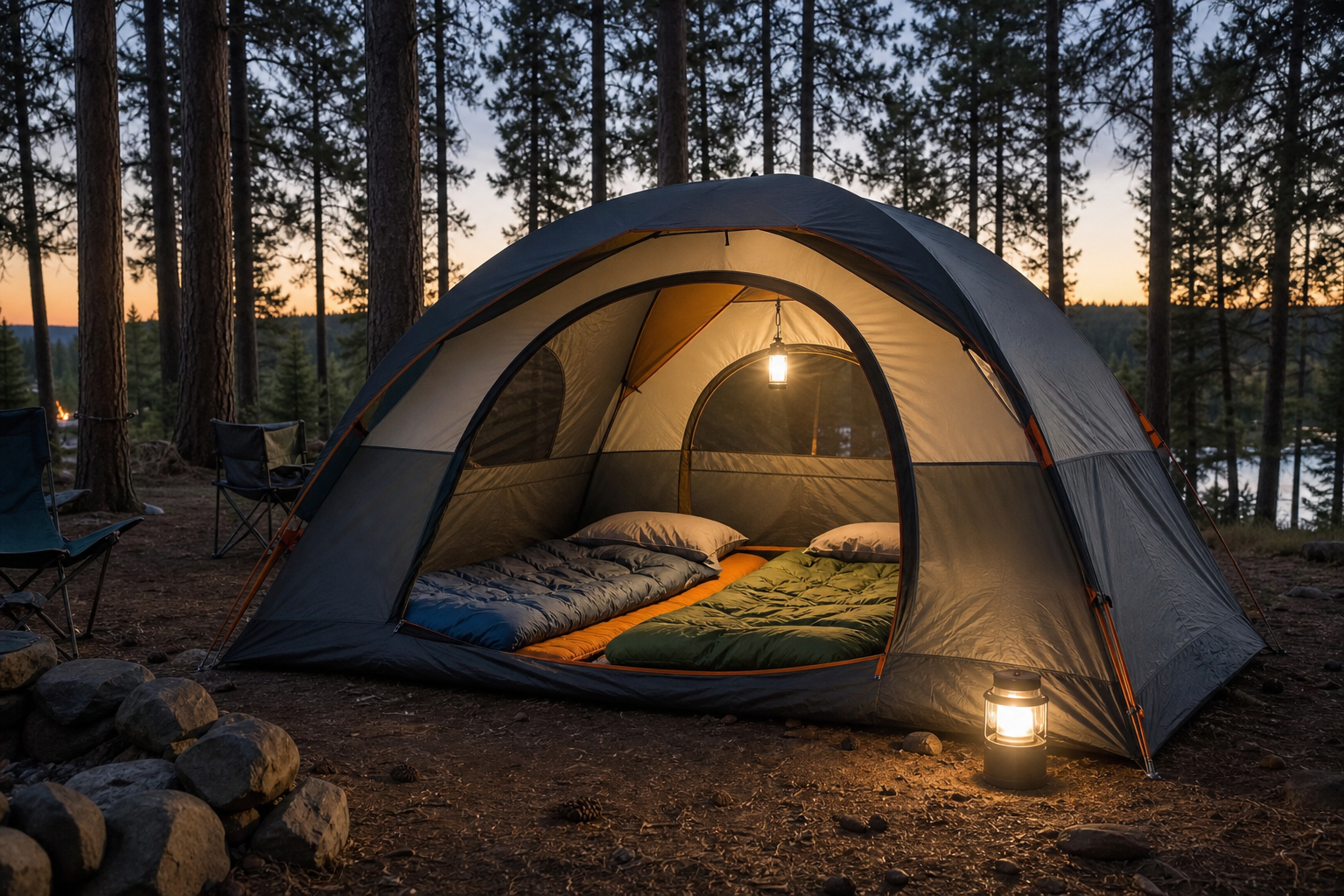
- Tent: Sized one capacity level above your family (a 6-person tent for a family of 4 gives room for gear)
- Ground tarp or footprint: Protects the tent floor from moisture and punctures
- Sleeping bags: Temperature-rated for the season. New England nights can drop into the 40s even in summer.
- Sleeping pads or air mattresses: Insulation from the ground matters as much as cushion
- Pillows: Bring your own from home. Rolled-up clothes work, but real pillows mean real sleep.
- Extra blankets: One per person, plus a spare for chilly nights
- Rainfly: Even if the forecast looks clear. Weather shifts quickly in the Northeast.
Camp Kitchen Essentials
Campground cooking does not require a full kitchen. A few key items keep meals simple and cleanup fast.
- Camp stove or portable grill: Plus fuel (propane canisters or charcoal)
- Cooler with ice: A 50-quart cooler handles a weekend for a family of four
- Pots, pans, and a cast iron skillet: One of each covers breakfast, lunch, and dinner
- Utensils: Spatula, tongs, can opener, corkscrew, sharp knife, cutting board
- Plates, bowls, and cups: Reusable melamine sets weigh almost nothing
- Trash bags: Heavy-duty, at least 3-4 per day
- Dish soap, sponge, and drying towel: Biodegradable soap is required at many campgrounds
- Paper towels and aluminum foil: Foil doubles as a cooking surface and food wrap
- Coffee maker or percolator: Non-negotiable for most parents
- Roasting sticks or skewers: For marshmallows, hot dogs, and campfire dinners
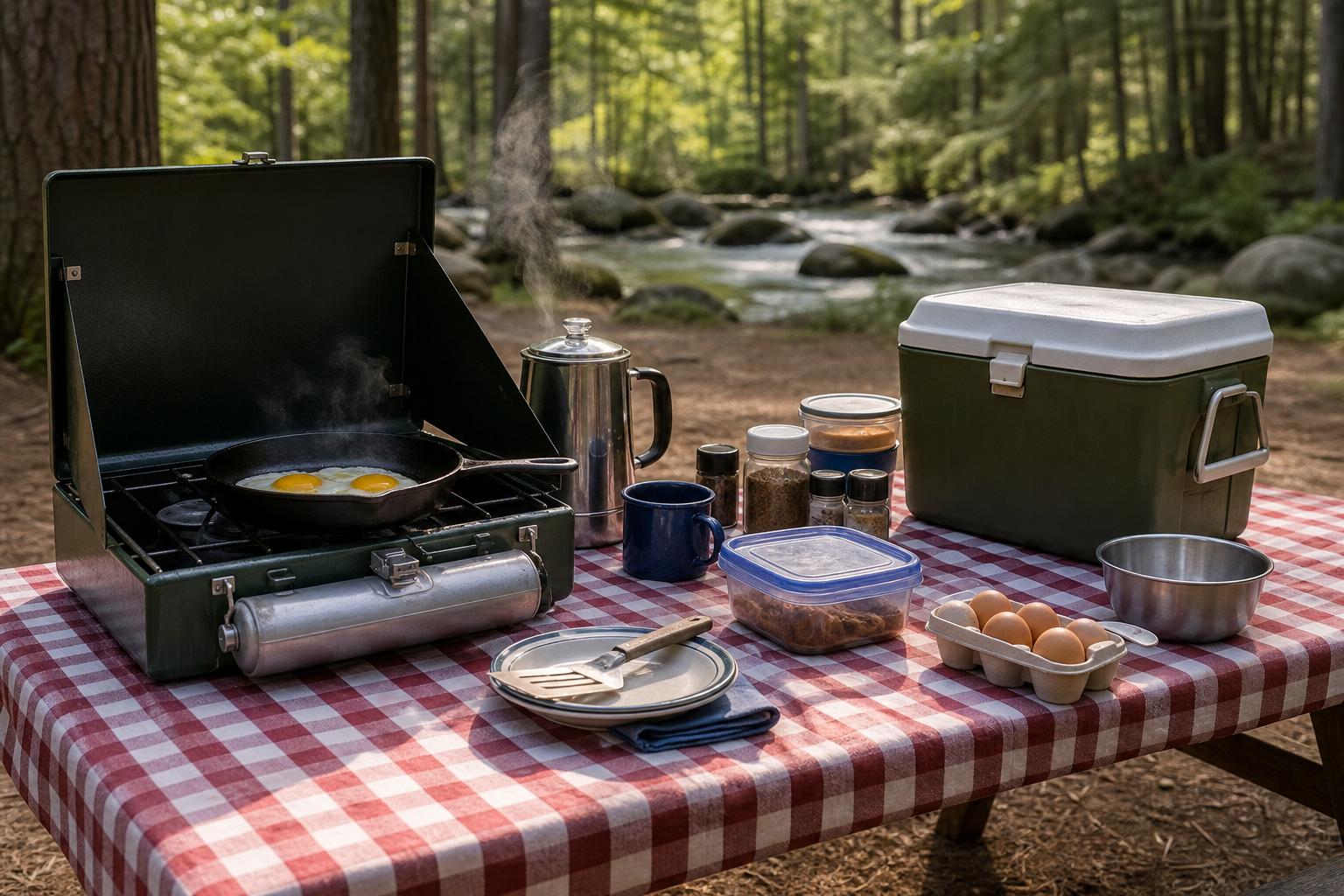
Campground cooking does not require a full kitchen. A few key items keep meals simple and cleanup fast.
- Camp stove or portable grill: Plus fuel (propane canisters or charcoal)
- Cooler with ice: A 50-quart cooler handles a weekend for a family of four
- Pots, pans, and a cast iron skillet: One of each covers breakfast, lunch, and dinner
- Utensils: Spatula, tongs, can opener, corkscrew, sharp knife, cutting board
- Plates, bowls, and cups: Reusable melamine sets weigh almost nothing
- Trash bags: Heavy-duty, at least 3-4 per day
- Dish soap, sponge, and drying towel: Biodegradable soap is required at many campgrounds
- Paper towels and aluminum foil: Foil doubles as a cooking surface and food wrap
- Coffee maker or percolator: Non-negotiable for most parents
- Roasting sticks or skewers: For marshmallows, hot dogs, and campfire dinners
Clothing and Footwear by Weather
The key to camping clothes is layering. Mornings and evenings run cool across New England and upstate New York campgrounds, even when afternoons are warm.
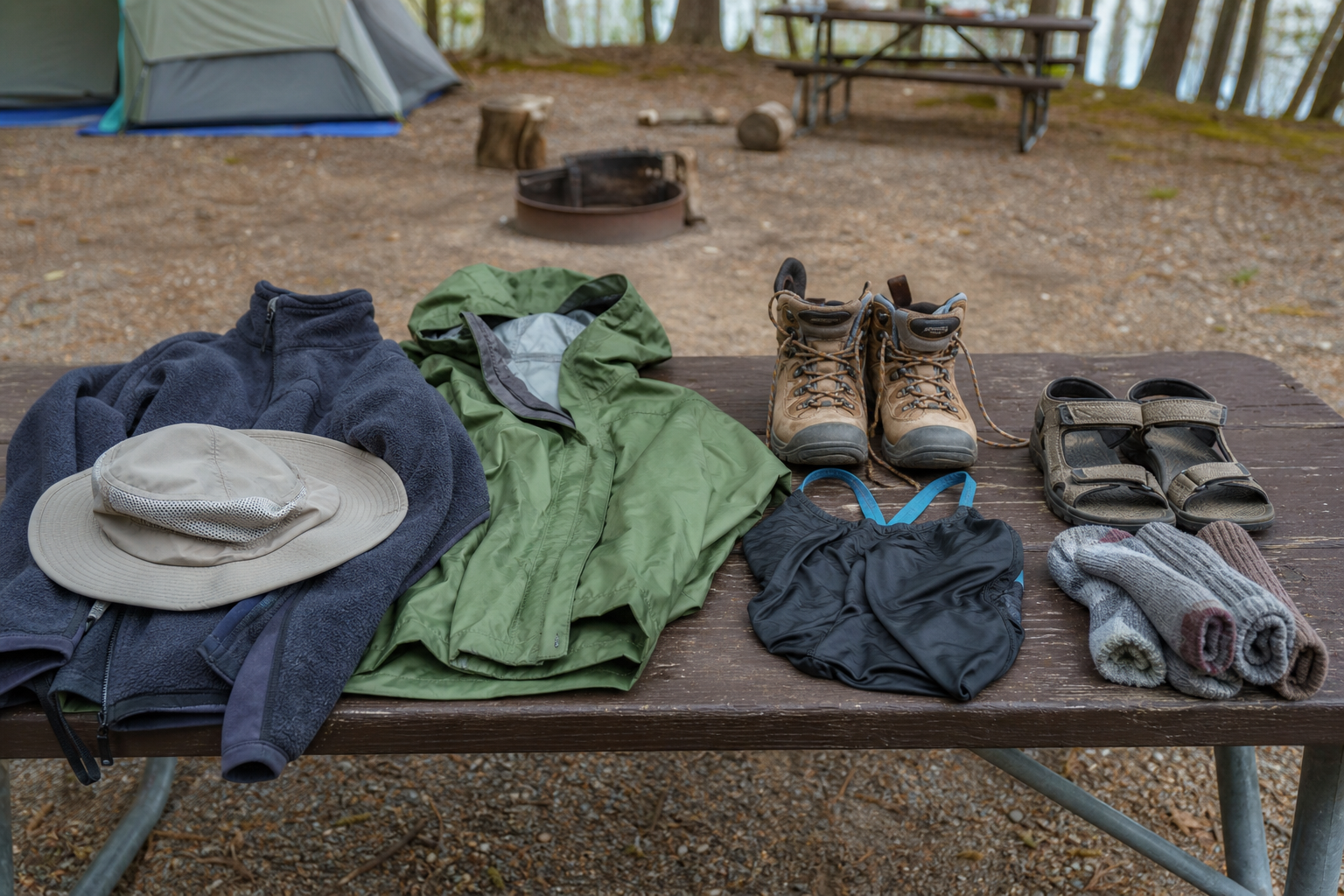
- Base layers: Moisture-wicking shirts and lightweight pants
- Mid layers: Fleece or hoodie for mornings and evenings
- Rain gear: Waterproof jacket and pants for every family member
- Closed-toe shoes: Sturdy shoes or hiking boots for trails and uneven ground
- Sandals or water shoes: For pool areas, showers, and lake access
- Swimsuits: Pack two per person so one can dry while the other is in use
- Extra socks: Bring more than you think you need. Wet socks ruin a hike fast.
- Hats: Sun hats for daytime, warm beanies for campfire nights
- Pajamas: Warm and comfortable for cold sleeping bags
Hygiene and Toiletries
Most Happy Grounds campgrounds have bathhouse facilities with showers, but packing your own hygiene supplies keeps things convenient.
- Towels: Quick-dry camping towels or regular bath towels
- Soap, shampoo, and conditioner: Travel-sized, biodegradable
- Toothbrushes and toothpaste
- Hand sanitizer: Multiple bottles placed around the campsite
- Toilet paper: Campground restrooms usually stock it, but a backup roll is smart
- Wet wipes: Essential for quick cleanups, sticky hands, and muddy faces
- Deodorant and personal items
- Mirror: A small hanging mirror for the campsite
Sun and Bug Protection
Sunburn and bug bites are the two most common camping complaints from families. A few items prevent both.
- Sunscreen: SPF 30 or higher, reapply every two hours
- Bug spray: DEET-based for adults, picaridin-based options for young children
- Citronella candles or torches: Set up around the campsite perimeter
- Tick remover tool: Essential for wooded campgrounds in the Northeast
- After-bite cream or sting relief: Calamine lotion or hydrocortisone
- Sunglasses: For every family member, including kids
- Lip balm with SPF
Safety and First Aid
A well-stocked first aid kit handles the minor scrapes and splinters that come with any camping trip.
- First aid kit: Bandages, gauze, antiseptic wipes, tweezers, medical tape, pain relievers (adult and children’s)
- Flashlights or headlamps: One per person, plus extra batteries
- Lantern: For general campsite lighting after dark
- Whistle: Attach one to each child’s clothing or backpack
- Fire extinguisher: Small, portable, and within reach of the campfire
- Emergency contact list: Campground office number, nearest hospital, and family contacts printed on paper
- Prescription medications: Keep in a waterproof bag with the first aid kit
Kids-Specific Gear
Children need their own category because their gear list is surprisingly long.
- Car seat or booster: For the drive, obviously, but easy to forget when packing camp gear
- Baby wipes: Useful for all ages, not just babies
- Diapers and changing supplies: If applicable, pack double what you think you need
- Comfort items: Favorite stuffed animal, blanket, or pillow from home
- Kid-sized sleeping bag: Adult bags swallow small children and lose warmth
- Nightlight or glow stick: Helps nervous kids feel safe in the tent at night
- High chair or booster seat: For campsite meals with toddlers
- Baby carrier or backpack: For hikes and walking around the campground
- Change of clothes (x3 minimum): Kids get dirty. Then they get dirty again.

Entertainment and Activities
Campground downtime is half the fun, but kids need options when they are between swimming, hiking, and meals.
- Board games and card games: UNO, Yahtzee, and classics travel well
- Frisbee, football, or soccer ball
- Cornhole set or ladder toss: If the campground does not have them on-site
- Scavenger hunt printable: Prepare one before you leave (nature-themed works best)
- Coloring books, crayons, and activity books: For rainy afternoons or quiet time
- Bikes and helmets: Many campgrounds have bike-friendly paths
- Fishing gear: Rods, tackle, and bait if your campground has lake or river access
- Binoculars: For birdwatching, wildlife spotting, and stargazing
- Books or audiobook downloads: For car rides and bedtime
Campgrounds like Riverbend in Blossvale, NY and Kings Bay in Champlain, NY host themed weekends with organized activities, so check the event calendar before you pack your own entertainment. You may not need as much as you think.
RV-Specific Add-Ons
If you are camping in an RV or travel trailer, you need a few additional items beyond the basics.
- Leveling blocks: To stabilize your rig on uneven ground
- Wheel chocks: Place behind tires after leveling
- Sewer hose and fittings: Plus disposable gloves for hookup and disconnect
- Water hose (food-safe): A white or blue drinking-water hose, not a garden hose
- Water pressure regulator: Protects your plumbing from high campground water pressure
- Surge protector: Plug in before connecting to campground electric
- 30/50-amp adapter: In case your hookup does not match your rig’s plug
- Extension cord (outdoor-rated): For power access that does not reach your site
- RV-safe toilet paper: Regular toilet paper clogs RV holding tanks
- Entry mat: Keeps dirt, grass, and mud outside the RV door
- Awning lights: String lights transform the campsite after dark
What NOT to Bring
Overpacking is almost as common as underpacking. Leave these at home:
- Valuables: Expensive jewelry, watches, or electronics you would worry about
- Glass containers: Broken glass at a campsite is a safety hazard, especially with kids
- Too many outfit options: You are camping, not attending a fashion show. Functional layers beat variety.
- Firewood from home: Most campgrounds, including all Happy Grounds locations, require you to purchase local firewood to prevent the spread of invasive pests
- Excessive electronics: One tablet for emergencies is fine. A full entertainment center defeats the purpose.
Download the printable version of this checklist to take with you on packing day. Print it, tape it to the garage wall, and check items off as they go into the car or RV. The PDF includes interactive checkboxes you can check off digitally, or print it out and mark items with a pen.
FAQs
What camping essentials should I pack for a family weekend in New England?
Start with shelter (tent or RV setup), sleeping bags rated for Northeast temperatures, a camp kitchen kit, layered clothing, rain gear, sun and bug protection, and a first aid kit. New England nights can be cool even in summer, so bring extra blankets and warm layers for everyone.
Do Happy Grounds campgrounds have camp stores for supplies I forget?
Yes. Most Happy Grounds locations stock firewood, ice, basic groceries, and camping supplies in their camp stores. Availability varies by location, so check your campground’s amenities page before your trip.
How do I pack a cooler for a family camping weekend?
Start with a layer of ice on the bottom, then pack meats and perishables in sealed bags. Add another layer of ice, then drinks and snacks on top. Freeze water bottles to double as ice packs that become drinking water as they thaw. Keep a separate cooler for drinks so you are not opening the food cooler constantly.
What should I pack differently for tent camping vs. RV camping?
Tent campers need a ground tarp, sleeping pads, and a quality rainfly. RV campers need leveling blocks, a sewer hose, a surge protector, a food-safe water hose, and RV-safe toilet paper. Both groups need the same kitchen, clothing, safety, and entertainment gear.
Is there a packing list specifically for kids at a campground?
Yes. Beyond the family basics, pack a kid-sized sleeping bag, comfort items from home (stuffed animal, blanket), extra changes of clothes (at least three), baby wipes, a night light or glow stick for the tent, and age-appropriate activities like coloring books, scavenger hunts, or card games.
What clothing layers do I need for camping in upstate New York or New England?
Pack moisture-wicking base layers, a fleece or hoodie for mornings and evenings, rain gear (jacket and pants), sturdy closed-toe shoes, water shoes for the pool or lake, and a warm hat for campfire nights. Temperatures in the Adirondacks and Connecticut hills can swing 30+ degrees between afternoon and early morning.
Happy Grounds campgrounds across New England and New York offer full-hookup RV sites, tent sites, cabins, and cottages with family amenities at every location. Whether you are heading to Kings Bay on Lake Champlain, Circle CG Farm near Boston, or Peaceful Pines in central Massachusetts, your trip starts with a good packing list.
Contact Happy Grounds to book your next family camping trip, or visit camphappygrounds.com to explore all 17 locations.