

Good food makes good camping trips. That might sound simple, but ask any experienced camper what separates a great weekend from a frustrating one, and meal planning almost always comes up. Families who show up at a Happy Grounds campground with a plan for breakfast, lunch, and dinner spend their time enjoying the campfire instead of scrambling to figure out what to eat. Planning meals for a family camping weekend comes down to five things: a meal map, camping-friendly recipes, prep you knock out at home, a cooler that stays cold, and a cooking setup that matches your menu. Get those right and even the picky eaters are happy.
Why Meal Planning Matters for Camping
Winging it works at home where the fridge is stocked and delivery is an option. At the campground, your options are limited to what you brought with you. Running to the nearest grocery store burns time and gas that should be spent hiking, swimming, or relaxing by the fire.
A simple meal plan eliminates the guessing game. You know exactly what you are making, when you are making it, and what ingredients you need. The result: less waste, less stress, and more time doing what you actually came to the campground to do.
Step 1: Map Out Your Meals
Start by counting the meals you need. A typical Friday-to-Sunday camping weekend at a Happy Grounds campground in New York, New England, or Vermont looks like this:
- Friday: dinner (arrival night, keep it simple)
- Saturday: breakfast, lunch, dinner (full day at the campground)
- Sunday: breakfast, lunch (pack up after lunch)
- Snacks: plan for morning, afternoon, and evening campfire snacks each day
That is five meals plus snacks for two full days. Write down what you will make for each meal before you start your grocery list. Assign one main dish per meal and keep variety simple. You are camping, not running a restaurant.
Step 2: Choose Camping-Friendly Meals
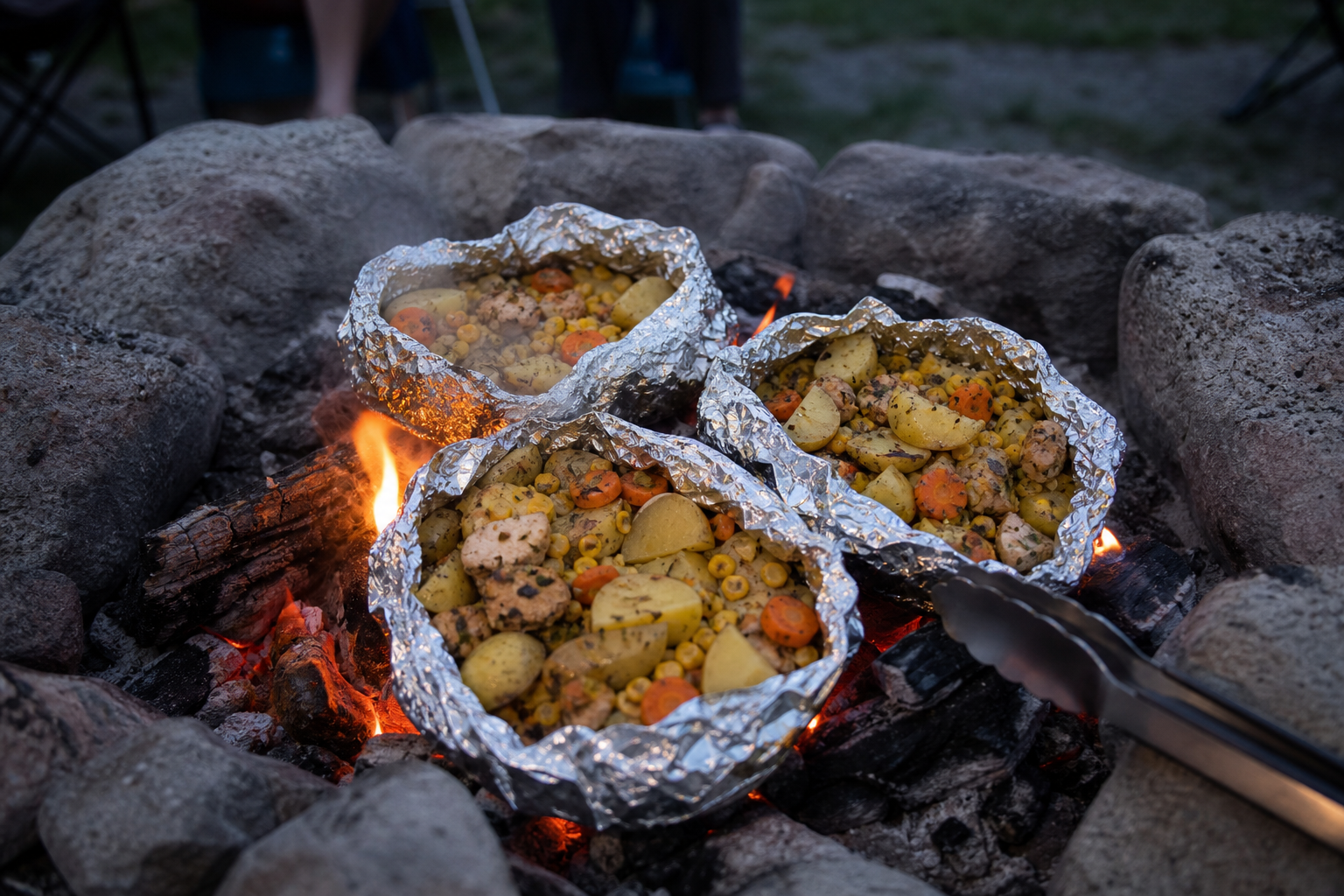
The best camping meals share a few traits: minimal prep, minimal cleanup, and maximum flavor. Here are ideas organized by meal time.
Breakfast Ideas
- Campfire scrambled eggs with pre-chopped vegetables and shredded cheese
- Pancakes or French toast on a camp griddle (pre-mix the batter at home in a squeeze bottle)
- Overnight oats prepared the night before in mason jars
- Breakfast burritos with pre-cooked sausage, eggs, and peppers wrapped in foil
- Yogurt parfaits with granola and fresh fruit (no cooking required)
Lunch Ideas
- Build-your-own sandwiches with deli meat, cheese, and toppings
- Wraps with hummus, grilled chicken, and fresh vegetables
- Hot dogs or bratwurst on the camp grill
- Pasta salad prepared at home and served cold from the cooler
- Quesadillas on the camp stove with cheese and leftover protein
Dinner Ideas
- Foil packet meals: chicken, vegetables, and seasoning wrapped in foil and cooked over coals
- One-pot chili or stew on the camp stove (prep ingredients at home, combine at the site)
- Grilled burgers with all the fixings
- Campfire pizza on pre-made flatbread with sauce, cheese, and toppings
- Stir-fry in a cast iron skillet with pre-cut vegetables and rice
Snack Ideas
- Trail mix (make your own blend at home)
- Fresh fruit: apples, oranges, grapes, and bananas travel well
- Cheese and crackers
- Granola bars and energy bites
- S’mores supplies for campfire evenings
- Popcorn popped over the campfire in a foil pan
Step 3: Prep at Home to Save Time at the Campsite
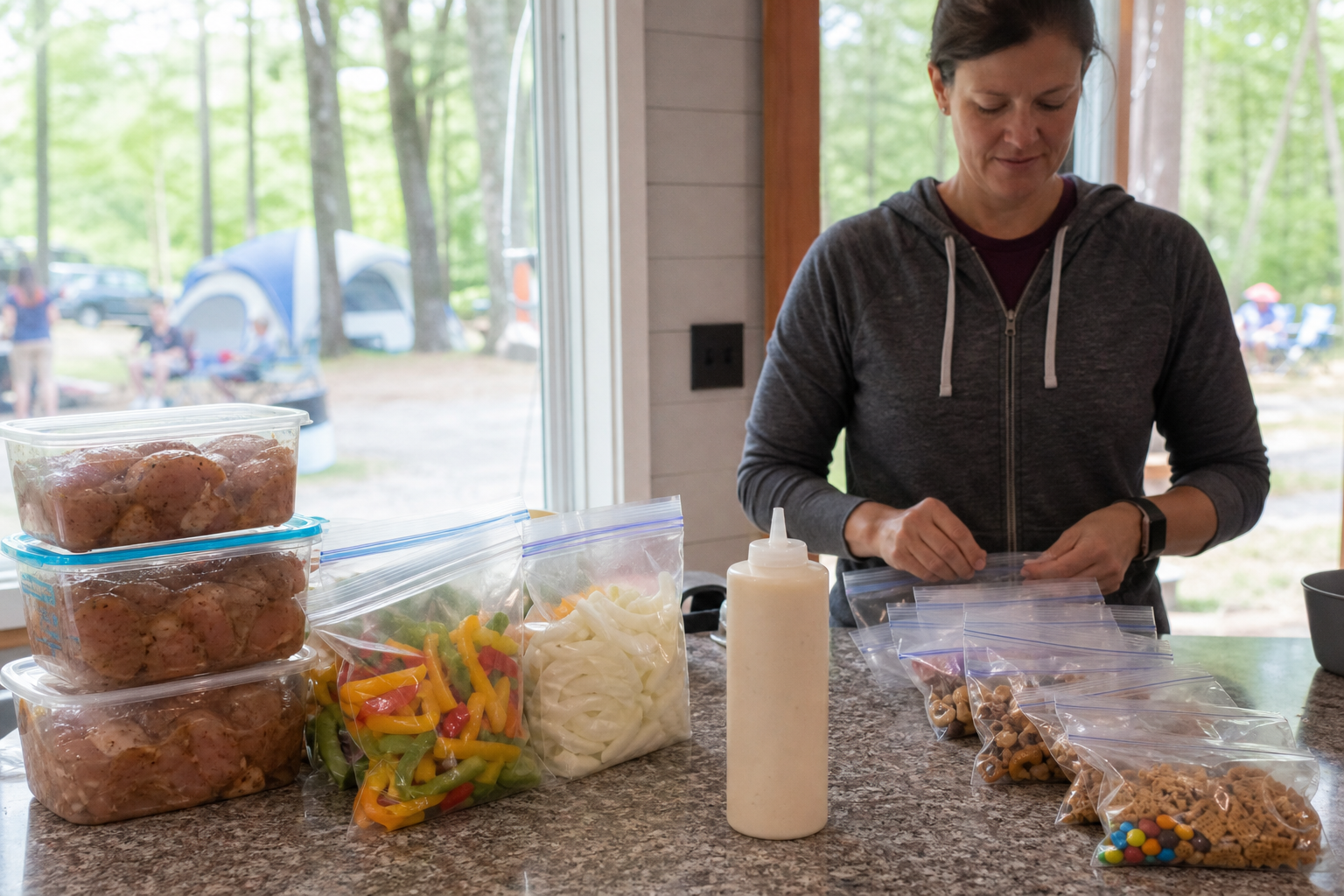
The more you prepare at home, the less work you do at the campground. Pre-trip meal prep is the single biggest time-saver for camping families.
- Chop all vegetables at home and store in labeled zip-lock bags
- Pre-cook and season meats that will be reheated at camp
- Mix dry ingredients for pancakes, biscuits, or cornbread and store in labeled bags
- Pre-make sauces, marinades, and dressings in small containers
- Freeze meals like chili, stew, or soup in containers. They act as ice packs in the cooler and thaw by dinnertime.
- Portion out snacks into individual servings so kids can grab and go
Step 4: Master Your Cooler Strategy
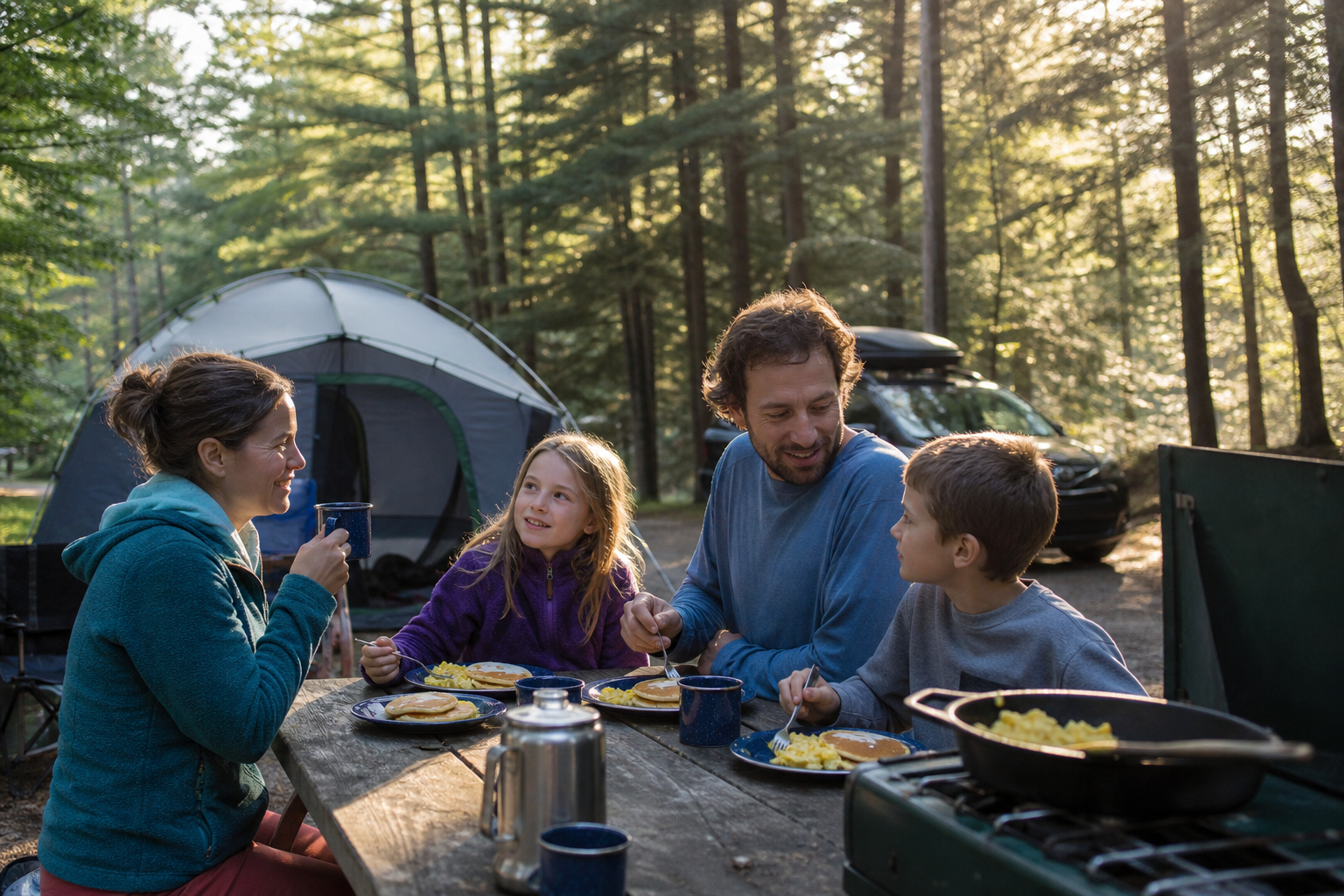
A poorly packed cooler leads to soggy food, warm drinks, and wasted groceries. Here is how to keep everything cold for the full weekend.
- Use block ice, not cubed. Block ice lasts two to three times longer than cubed ice from the gas station.
- Pre-chill the cooler with a sacrificial bag of ice the night before. Dump it before packing food.
- Layer your cooler: ice on the bottom, items you need last on the bottom, items you need first on top.
- Use two coolers if possible: one for drinks (opened frequently) and one for food (opened only at meal times).
- Freeze water bottles to use as ice packs. As they melt, you have cold drinking water.
- Keep the cooler in the shade and cover it with a reflective blanket or towel.
- Drain meltwater daily but do not dump all the ice. Cold water still keeps food cooler than air.
Step 5: Plan Your Cooking Setup

Decide what cooking equipment you are bringing before you leave. Most camping meals can be made with a basic setup.
- Camp stove (two-burner propane stoves handle most meals)
- Cast iron skillet (versatile for breakfast, lunch, and dinner)
- Large pot for boiling water, soups, and stews
- Camp griddle for pancakes, burgers, and sandwiches
- Aluminum foil (heavy duty) for foil packet meals
- Cooking utensils: spatula, tongs, large spoon, can opener, sharp knife
- Plates, bowls, cups (reusable or quality paper)
- Dish soap, sponge, and a collapsible wash basin
- Paper towels and trash bags
Happy Grounds campgrounds with full hookup RV sites give you the option to cook inside your RV as well, whether you are parked in the Berkshires at Bonnie Brae or along the Hudson River at Glen-Hudson. But cooking outside over the fire or camp stove is half the experience.
Step 6: Keep It Clean and Safe
Food safety matters even more outdoors where refrigeration is limited and wildlife can smell your dinner from a distance.
- Never leave food out at the campsite. Pack everything back into the cooler or a sealed container after meals.
- Wash hands before handling food. Bring hand sanitizer as a backup.
- Use a meat thermometer to check doneness on grilled meats.
- Store coolers inside your vehicle at night. Bears, raccoons, and other wildlife will investigate a cooler left outside.
- Clean up immediately after meals. Leaving dirty dishes or food scraps attracts animals and insects.
- Pack out all the trash. Leave your campsite cleaner than you found it.
Sample Weekend Meal Plan
Here is a complete meal plan for a Friday-to-Sunday family camping weekend at any Happy Grounds campground, from White Pines in the Litchfield Hills of Connecticut to Kings Bay on Lake Champlain:
Friday
- Dinner: Grilled hot dogs and bratwurst with chips, coleslaw, and baked beans (easy arrival night meal)
- Evening snack: S’mores by the campfire
Saturday
- Breakfast: Campfire scrambled eggs with peppers, onions, and cheese. Toast on the griddle.
- Snack: Trail mix and fruit
- Lunch: Build-your-own wraps with deli turkey, hummus, spinach, and cheese
- Snack: Cheese and crackers with apple slices
- Dinner: Foil packet chicken with potatoes, corn, and seasoning, cooked over campfire coals
- Evening snack: Campfire popcorn
Sunday
- Breakfast: Pancakes on the camp griddle with syrup and fresh berries. Bacon on the side.
- Snack: Granola bars while packing up
- Lunch: Leftover wraps or sandwiches with remaining deli supplies (use up what is left before heading home)
FAQs: Camping Meal Planning
Q: How much food should I bring for a weekend camping trip?
A: Plan for three meals and two to three snacks per person per day. For a family of four on a two-night trip, that is roughly 15 meals plus snacks. Always bring a little extra in case meals take more than expected.
Q: What is the easiest meal to make while camping?
A: Foil packet meals are the simplest camping dinner. Place protein, vegetables, and seasoning in a foil pouch, seal it, and cook it directly on campfire coals for 20 to 30 minutes. Minimal prep, zero cleanup.
Q: How do I keep food fresh for the whole weekend?
A: Use block ice instead of cubed ice, pre-chill your cooler, and keep it in the shade. Use a separate cooler for drinks so the food cooler stays closed most of the day.
Q: Can I cook at my campsite at Happy Grounds?
A: Yes. Happy Grounds campgrounds provide fire rings at most campsites. You can cook over the campfire or bring a portable camp stove. Full hookup RV sites also allow cooking inside your RV. Check your campground’s specific fire policies on its location page at https://camphappygrounds.com/campgrounds/.
Q: What should I do with food waste at the campground?
A: Pack out all food waste and trash. Never leave food scraps at the campsite or in the fire ring. Use sealed trash bags and dispose of them in the campground’s designated waste stations.
Q: Do I need to bring my own water for cooking?
A: Most Happy Grounds campgrounds have potable water available at spigots or water stations. Bring a refillable jug for your campsite so you always have water handy for cooking and cleaning.
Q: Is there a printable camping meal planner I can bring with me?
A: Yes. The Weekend Camping Meal Planning Kit is a two-page printable with a fill-in meal grid for Friday through Sunday, a grocery list sorted by aisle, a make-ahead prep checklist, cooler packing steps, and a camp kitchen gear list. Print it, stick it on the fridge while you shop, and take it to the campground.
Plan your next camping weekend at a Happy Grounds campground. With 18 locations across New York, New England, and Vermont, there is a campground within a few hours of home. Call 508-519-3200 or contact the team to find the perfect location for your family.