

The campfire is the center of every camping evening. It is where families cook dinner, roast marshmallows, tell stories, and sit together under the stars. It is also where most campground injuries happen when basic safety steps are skipped.
Campfire safety is straightforward, but it requires attention, especially when kids and pets are part of the picture. A few simple habits, applied consistently, keep the campfire fun without the trip to the emergency room. This checklist covers everything from building the fire to putting it out completely, with specific guidance for families camping with children.
Whether you are at a Happy Grounds campground in New England, an Adirondack state park, or a backyard fire pit, these rules apply.
Before You Light: Campfire Preparation
Safe campfires start before you strike a match. Preparation prevents most campfire problems.
- Check campground fire rules. Many campgrounds have specific fire regulations, including burn bans during dry conditions, approved fire pit locations, and quiet hours for campfires. Happy Grounds campgrounds post fire rules at check-in. Read them.
- Use only designated fire pits or rings. Never build a fire directly on the ground, on a picnic table, or in an area not designated for fires. Campground fire rings are designed to contain the fire.
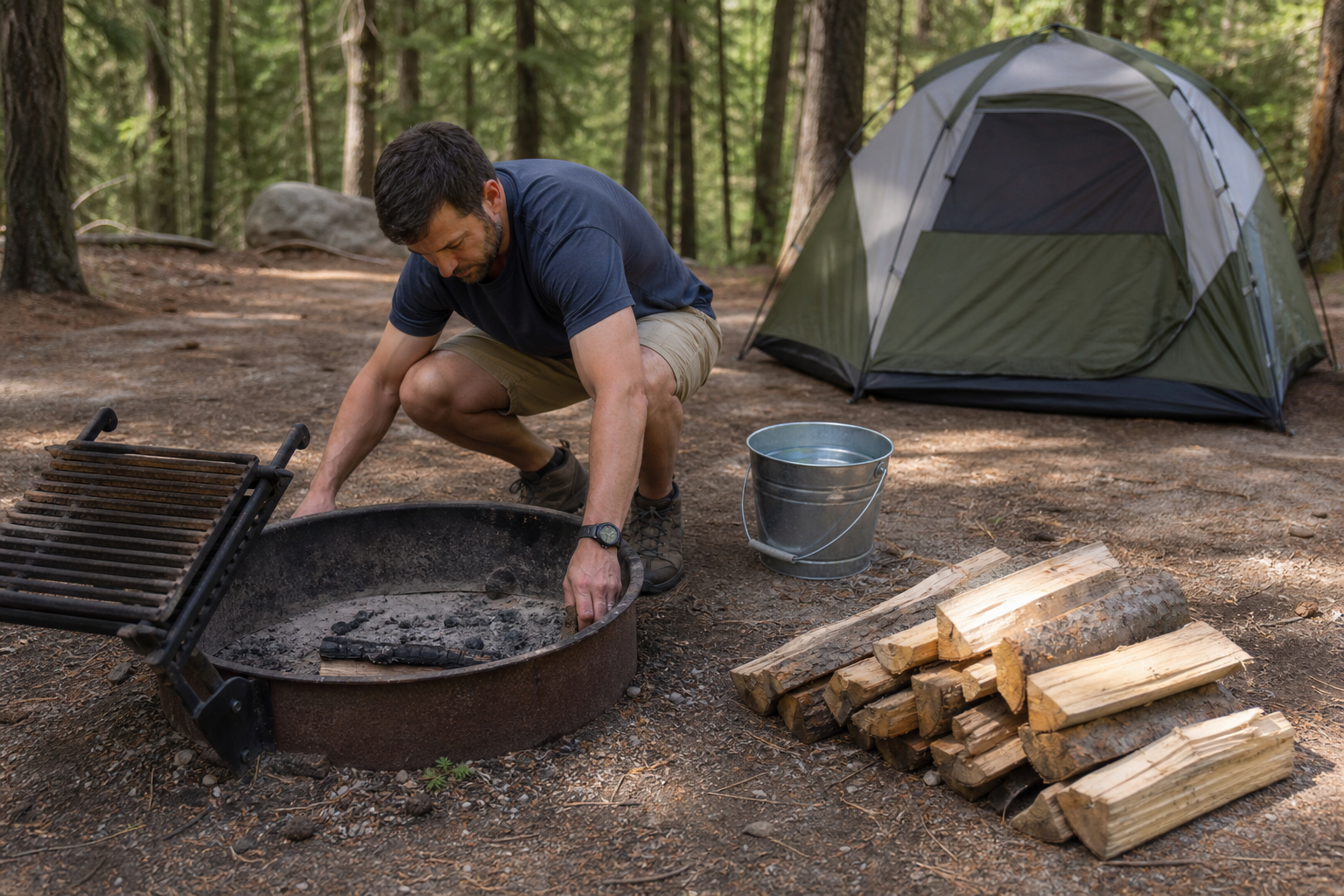
- Clear the area around the fire pit. Remove leaves, sticks, paper, and any flammable materials within a 10-foot radius of the fire ring. Move chairs, tents, and gear back from the fire.
- Check the wind. Light wind is fine. Strong, gusty wind pushes sparks and embers outside the fire ring. If wind is strong enough to blow paper plates off the picnic table, skip the campfire for the night.
- Gather water or a fire extinguisher. Before you light the fire, place a bucket of water, a garden hose (if available), or a fire extinguisher within arm’s reach of the fire ring. Not “somewhere at the campsite.” Within arm’s reach.
- Buy local firewood. Most campgrounds, including all Happy Grounds locations, require campers to purchase firewood on-site or locally. Transporting firewood from home spreads invasive insects like the emerald ash borer. Local firewood protects the forests around your campground.
Building a Safe Campfire

A well-built fire is easier to control, burns more efficiently, and produces less smoke.
- Start small. Begin with a small pile of tinder (dry leaves, newspaper, or fire starters), add kindling (small sticks and twigs), then gradually add larger pieces of firewood. Building up slowly gives you control over the fire’s size.
- Use the teepee or log cabin method. Teepee: lean kindling against each other in a cone shape over the tinder. Log cabin: stack kindling in alternating layers like a miniature cabin. Both methods allow airflow, which is what keeps a fire burning.
- Keep the fire manageable. A campfire does not need to be a bonfire. A fire that fits inside the fire ring with flames no taller than 2-3 feet is large enough for cooking, warmth, and ambiance.
- Use only approved fuel. Burn only dry, untreated wood. Never burn trash, plastic, treated lumber, painted wood, or aerosol cans. These release toxic fumes and can cause explosive flare-ups.
- Add wood gradually. Place logs on the fire gently. Tossing or dropping logs sends sparks flying.
- Never use gasoline, lighter fluid, or accelerants to start or boost a campfire. Use commercial fire starters or natural tinder. Accelerants cause sudden, uncontrollable flare-ups.
Supervision Rules for Kids
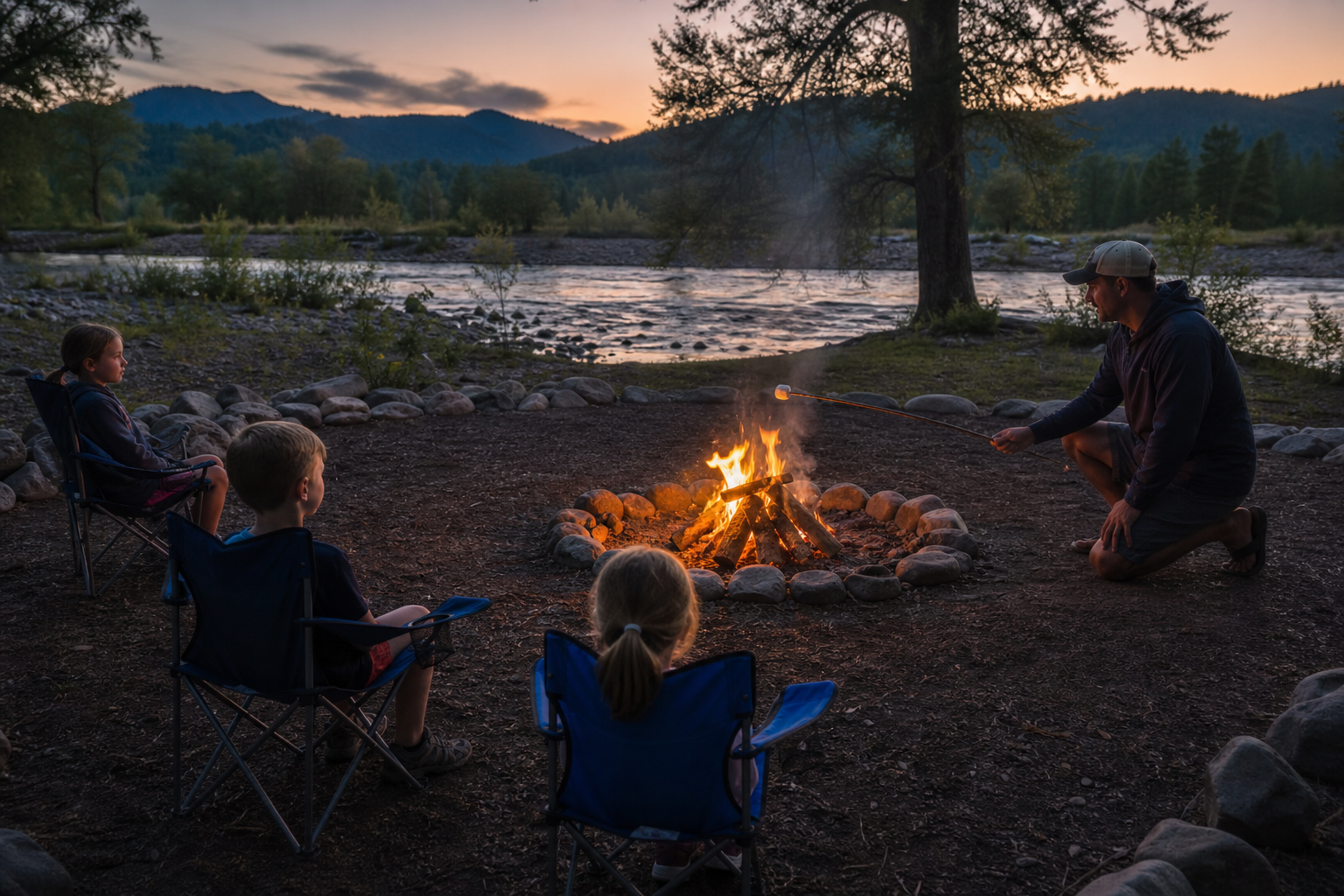
Children are naturally drawn to campfires, which is exactly why they need clear rules and constant supervision.
- Establish a safety circle. Mark a boundary around the fire pit (at least 3-4 feet from the ring) using chairs, rocks, or a verbal rule. Children stay outside the circle unless an adult brings them closer for marshmallow roasting.
- No running near the fire. Running, chasing, or roughhousing near the campfire is the fastest path to a burn injury. Enforce this rule consistently with every child at the campsite.
- Adults tend the fire. Only adults add wood, move logs, and adjust the fire. Kids watch. This is not a teaching moment for a 7-year-old.
- Marshmallow roasting rules. Use long roasting sticks (at least 30 inches). Children should be seated, not standing, while roasting. An adult stays within arm’s reach. Blown-on marshmallows are still hot enough to burn lips and fingers. Let them cool.
- No loose clothing near the fire. Hoodies with dangling strings, scarves, and loose pajama pants are fire hazards. Tuck or remove anything that could catch a spark.
- Designate a campfire supervisor. At a campsite with multiple families, one adult should be the designated fire watcher at all times. Rotate the duty. “Everyone is watching” often means no one is watching.
Pet Safety Around Campfires
Dogs and campfires coexist at most campgrounds, but pets need their own safety considerations.
- Leash distance. Keep dogs on a leash tied to a fixed point at least 4-5 feet from the fire ring. A dog that bolts through the fire pit creates danger for the dog and everyone around it.
- Paw burn awareness. Dogs do not understand that fire rings, embers, and ash are hot. After the fire is out, the metal ring and surrounding ground can stay hot for hours. Keep dogs away from the fire area even after the flames are gone.
- Ember kicks. Dogs running near the fire ring can kick up embers, ash, and hot coals. Keep the fire area clear and the dog at a safe distance.
- Food temptation. Dogs will try to reach food being cooked over the fire. Position the dog’s tie-out so they cannot reach the cooking area.
- Burn first aid for pets. If your dog steps on a hot ember or ash, cool the paw with clean water immediately and contact a veterinarian for further guidance.
Cooking on a Campfire Safely
Campfire cooking is one of the best parts of camping, but open-flame cooking requires more attention than a kitchen stove.
- Use a stable grate. If your fire ring has a built-in cooking grate, use it. If not, bring a portable grill grate that sits securely over the fire. Unstable cooking surfaces tip and spill hot food.
- Use long-handled utensils. Tongs, spatulas, and forks with handles at least 12-18 inches long keep your hands away from the flames.
- Watch for grease fires. Grease dripping from burgers, bacon, or sausages onto open flames can flare up suddenly. Keep a lid or baking sheet nearby to smother a grease fire. Never pour water on a grease fire.
- Hot handle awareness. Metal pots, pans, and grates over a fire become extremely hot. Use oven mitts or heat-resistant gloves every time. Tell children that everything near the fire is “hot, do not touch.”
- Cook over coals, not flames. Coals provide even, consistent heat. Flames produce uneven heat and more smoke. Let the fire burn down to a bed of coals before cooking.
- Never leave cooking food unattended. Campfire cooking requires constant attention. Grease can flare, food can burn, and the fire can shift.
Properly Extinguishing a Campfire
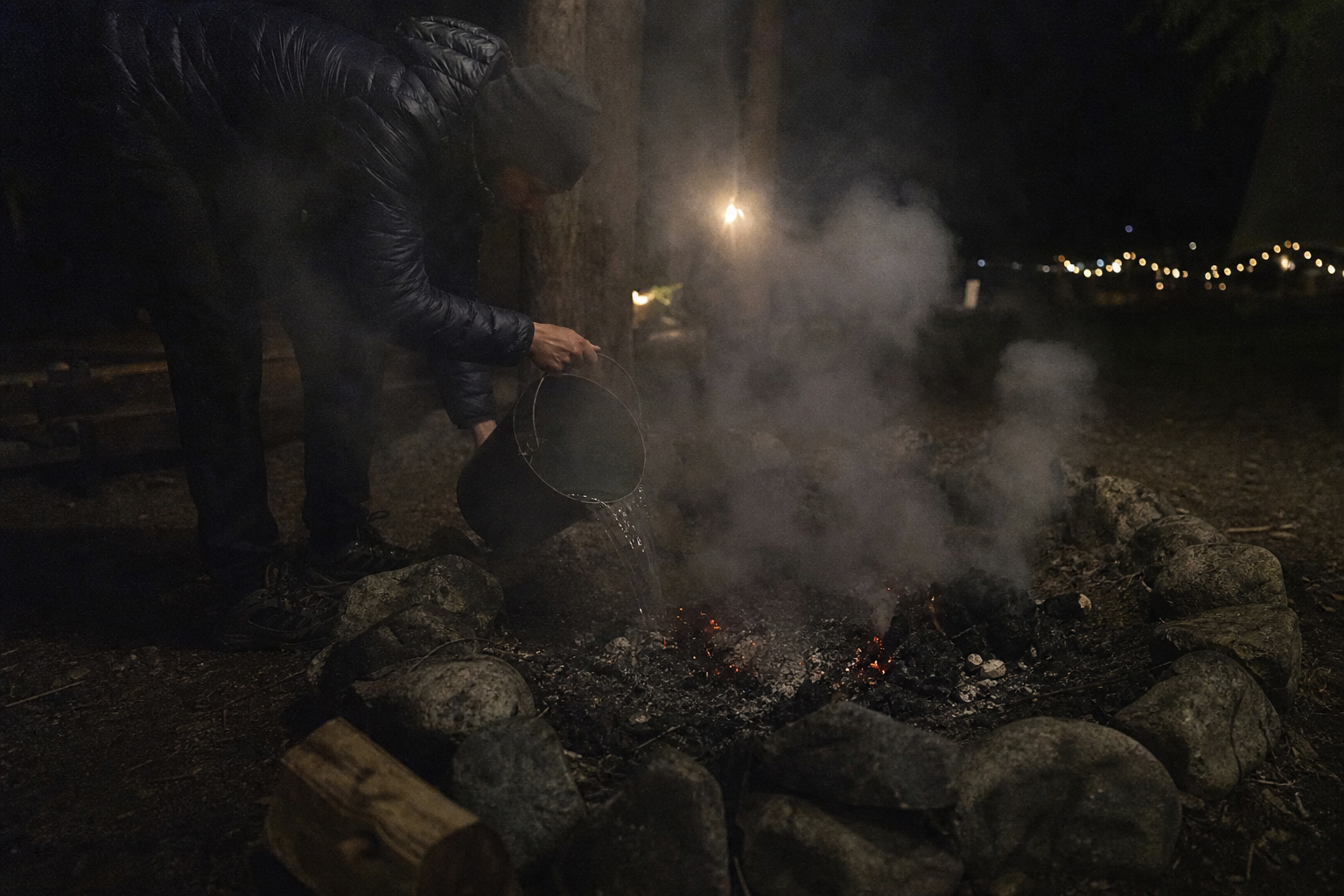
An improperly extinguished campfire is the leading cause of campground and wildfire fires. “It looks out” is not the same as “it is out.”
Follow the drown-stir-feel method every single time:
- Drown. Pour water over the entire fire, not just the red embers. Douse the coals, the logs, and the surrounding area of the fire ring. Use more water than you think is necessary.
- Stir. Use a stick or shovel to stir the wet ashes, turning over coals and logs to expose hidden embers underneath. Buried embers can reignite hours later.
- Drown again. Add more water after stirring. Listen for hissing. If you hear hissing, there are still hot spots.
- Feel. Hold the back of your hand near (not on) the ashes. If you feel any heat, repeat the drown-stir-drown process. The ashes should be cool to the touch before you leave.
Never leave a campfire unattended. Not for a bathroom trip, not for a walk to the car, not while you run to the camp store. An attended fire is always safer than an unattended one.
Never leave a campfire burning overnight. Extinguish the fire before going to bed. Wind shifts during the night can push embers into dry brush.
Campfire Safety Gear to Pack
Bring these items on every camping trip where campfires are planned:
- Fire extinguisher (small, portable): ABC-rated, checked and charged before every trip
- Water bucket: A collapsible bucket works for camping. Fill it before lighting the fire.
- Long matches or a long-reach lighter: Keep ignition sources away from your hands and face
- Heat-resistant gloves: For handling hot grates, pots, and fire tools
- Long roasting sticks: At least 30 inches for safe marshmallow and hot dog roasting
- Fireplace shovel or trowel: For stirring ashes and spreading coals
- First aid kit with burn supplies: Burn cream, non-stick gauze pads, medical tape, and pain relievers
What to Do If Someone Gets Burned
Despite precautions, burns can happen. Knowing the immediate response matters.
For minor burns (small area, red skin, no blistering):
- Cool the burn under clean, cool (not ice-cold) running water for at least 10 minutes
- Do not apply ice, butter, or toothpaste. These home remedies can worsen the injury.
- Apply aloe vera gel or burn cream after cooling
- Cover with a non-stick bandage
- Give age-appropriate pain reliever if needed
For serious burns (blistering, large area, or burns on face/hands/joints):
- Cool with running water for 10-20 minutes
- Do not pop blisters
- Cover loosely with a clean, non-stick bandage
- Seek medical attention. Know the location of the nearest urgent care or emergency room before your trip.
For clothing that catches fire:
- Stop, drop, and roll. Teach this to children before the campfire, not during an emergency.
- Smother flames with a blanket or jacket
- Cool the burn with water
- Call 911 if needed
Printable Campfire Safety Checklist
Download the printable version of this checklist to keep at your campsite. Post it near the fire ring as a reminder for the whole family.
FAQs
What are the campfire rules at Happy Grounds campgrounds?
Happy Grounds campgrounds require the use of designated fire rings only, locally purchased firewood, and fires to be fully extinguished before leaving the site or going to bed. Specific fire regulations may vary by location, especially during dry conditions. Check with the campground office at arrival for current rules.
How far should kids sit from a campfire?
Children should stay at least 3-4 feet from the fire ring at all times unless an adult is directly supervising an activity like marshmallow roasting. Establish a visible safety circle and enforce it consistently.
Can I bring my own firewood to a campground in New England?
Most campgrounds in New England and New York require campers to purchase local firewood to prevent the spread of invasive species like the emerald ash borer. Happy Grounds campgrounds sell firewood on-site. Leave home firewood at home.
How do I fully extinguish a campfire?
Use the drown-stir-feel method: pour water over all coals and logs, stir the ashes to expose hidden embers, pour more water, then hold the back of your hand near the ashes to check for heat. Repeat until the ashes are cool to the touch.
What should I do if a campfire gets out of control?
If the fire exceeds the fire ring or begins spreading, use your fire extinguisher or water bucket immediately. If you cannot control it within 30 seconds, call 911 and alert the campground office. Move all people and pets away from the area.
Is it safe to cook over a campfire with kids around?
Yes, with precautions. Use long-handled utensils, cook over coals rather than open flames, keep children behind the safety circle during active cooking, and never leave campfire cooking unattended. Hot grease and boiling liquids are the biggest cooking-related risks.
Most campgrounds in New England and New York require campers to purchase local firewood to prevent the spread of invasive species like the emerald ash borer. Happy Grounds campgrounds sell firewood on-site. Leave home firewood at home.
How do I fully extinguish a campfire?
Use the drown-stir-feel method: pour water over all coals and logs, stir the ashes to expose hidden embers, pour more water, then hold the back of your hand near the ashes to check for heat. Repeat until the ashes are cool to the touch.
Campfires do not need to be stressful. A few consistent habits, the right safety gear, and clear rules for kids and pets keep every campfire evening enjoyable. Happy Grounds campgrounds across New England and New York provide designated fire rings, local firewood, and campsite layouts designed for safe, family-friendly campfire nights.
Contact Happy Grounds to book your camping trip, or visit camphappygrounds.com to explore campgrounds with fire-friendly amenities.