

A successful family camping weekend is not about spontaneity. It is about showing up prepared, knowing what is packed, having a loose plan for the weekend, and leaving enough room for the fun to happen naturally. The families who enjoy camping the most are usually the ones who spent 30 minutes planning before the trip, not the ones scrambling at the campsite because they forgot the can opener.
This checklist walks through everything from the planning phase (two weeks out) to the departure (Sunday morning), including a complete packing list, a setup guide for arrival, and a day-by-day weekend structure. Whether your family is heading to a Happy Grounds campground in Connecticut, Massachusetts, or upstate New York, this is your weekend blueprint.
Two Weeks Before: Planning
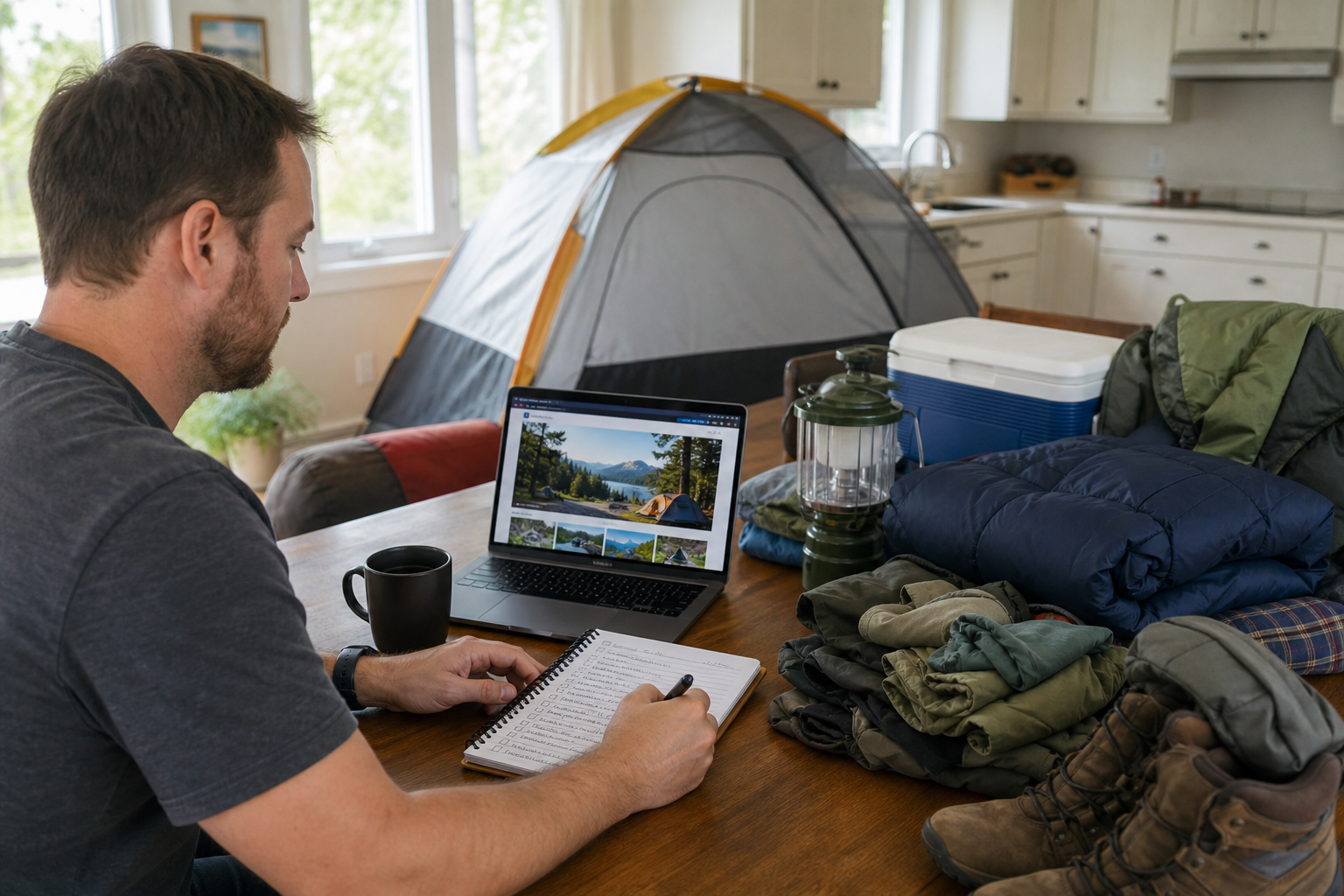
The planning phase takes 30 minutes and prevents 90% of weekend stress.
- Choose your campground and book your site. Decide between tent, RV, cabin, or cottage. Check the amenities page for pool, rec hall, and activity availability. Happy Grounds campgrounds list site types and amenities online for each location.
- Check for themed weekends. If your dates fall on a Christmas in July, Halloweekend, or Carnival weekend, plan accordingly. These weekends add built-in entertainment and community activities.
- Check the weather forecast. A preliminary check two weeks out tells you whether to pack more rain gear or more sunscreen. Check again the day before departure for updates.
- Plan your meals. Count the meals you need (Friday dinner, Saturday breakfast/lunch/dinner, Sunday breakfast) and write a grocery list. Pre-plan each meal so you buy exactly what you need.
- Inventory your gear. Pull out the tent, sleeping bags, stove, and cooler. Check for damage, missing parts, and expired propane. Replace anything that will not work before the trip, not the morning of departure.
- Download or print campground information. Check-in time, site number, campground map, rules, and the office phone number. Do not rely on cell service for critical details.
- Confirm your reservation. A quick call or email to the campground confirms your site, check-in window, and any campground-specific rules (pet policies, quiet hours, fire rules).
One Week Before: Prep
This is the prep window where you knock out tasks that cannot wait until departure day.
- Grocery shop. Buy all meal ingredients, snacks, drinks, and campfire supplies (marshmallows, hot dogs, s’mores fixings). Stick to the meal plan.
- Meal prep at home. Marinate meats, chop vegetables, pre-make breakfast burritos or sandwiches, and portion snacks into zip-lock bags. Prep at home saves time and mess at the campsite.
- Test your gear. Set up the tent in the backyard to confirm all poles, stakes, and the rainfly are present and functional. Test the camp stove. Inflate the air mattress and check for leaks.
- Charge everything. Phone, tablet, portable battery pack, bluetooth speaker, flashlights, and headlamps. Start charging the week before so everything is full by departure.
- Print a packing checklist. Use the list below. Check items off as they go into the vehicle so nothing gets left on the garage floor.
Packing Day: The Master List
Organize items by category. Pack each category together so nothing gets buried.
Shelter and Sleeping
- Tent (with poles, stakes, rainfly, and ground tarp) OR RV setup gear
- Sleeping bags (temperature-rated for the season)
- Sleeping pads or air mattresses
- Pillows
- Extra blankets
Kitchen and Cooking
- Camp stove and fuel
- Cooler with ice (pack the morning of departure)
- Pots, pans, skillet, and cooking utensils
- Plates, bowls, cups, and silverware
- Can opener, corkscrew, sharp knife, cutting board
- Dish soap, sponge, and towel
- Paper towels, aluminum foil, zip-lock bags
- Trash bags (heavy-duty, at least 4-5)
- Coffee maker and coffee
Clothing (per person)
- 2-3 changes of clothes
- Rain jacket
- Fleece or hoodie for cool mornings and evenings
- Swimsuit and swim towel
- Closed-toe shoes and sandals/water shoes
- Extra socks (2-3 pairs)
- Hat and sunglasses
- Warm pajamas
Toiletries and Hygiene
- Towels
- Soap, shampoo, toothbrushes, toothpaste
- Sunscreen (SPF 30+)
- Bug spray
- Hand sanitizer
- Wet wipes
- Toilet paper (backup roll)
Safety and Lighting
- First aid kit
- Flashlights or headlamps (one per person) plus extra batteries
- Lantern for the campsite
- Fire extinguisher (small, portable)
- Whistle (attach to each child’s backpack)
Entertainment
- Board games and/or card games
- Frisbee, football, or ball
- Coloring books and crayons (for kids)
- Bikes and helmets (if applicable)
- Fishing gear (if applicable)
- Books or audiobook downloads
Kids-Specific (if applicable)
- Kid-sized sleeping bag
- Comfort items (stuffed animal, blanket)
- Extra changes of clothes (3+ minimum)
- Nightlight or glow stick
- Baby supplies (diapers, wipes, portable high chair)
Campfire Supplies
- Roasting sticks
- Marshmallows, chocolate, graham crackers
- Long matches or lighter
- Firewood (buy local at the campground)
Friday Arrival: Setup Guide
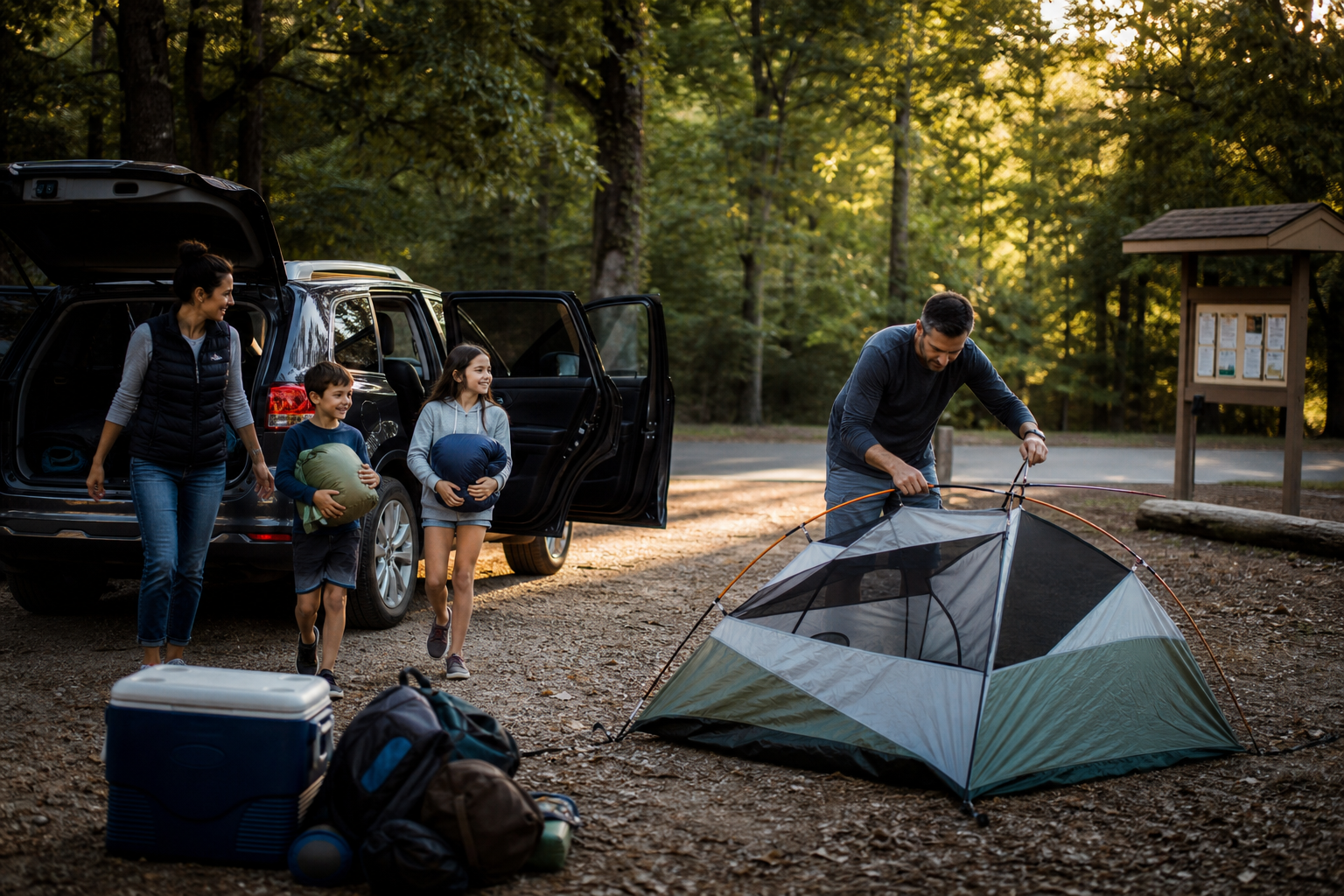
Your Friday evening sets the tone for the weekend. Keep it low-key.
4:00-5:00 PM: Arrive and Check In
- Stop at the campground office, confirm your site number, grab a campground map, and ask about any current rules (fire restrictions, quiet hours, pool schedule).
- Drive to your site. Unload the car but do not unpack everything yet.
5:00-5:30 PM: Set Up Camp
- Set up the tent or level and connect the RV.
- Inflate sleeping pads, lay out sleeping bags, and organize the sleeping area first. If it gets dark before you finish everything else, at least you have a place to sleep.
- Set up the kitchen area: camp stove, cooler, and food storage.
- Arrange chairs around the fire ring.
5:30-6:30 PM: Simple Dinner
- Friday dinner should be the easiest meal of the weekend. Pre-made sandwiches, hot dogs, or a one-pot meal you prepped at home. Do not attempt an ambitious dinner after a drive and camp setup.
6:30-8:00 PM: Explore the Campground
- Walk the campground loop with the family. Find the bathhouse, the pool, the rec hall, the playground, and the camp store. Let kids orient themselves so they feel comfortable.
- If there is a campfire, keep it short on Friday. Everyone is tired from the drive.
8:00-9:00 PM: Bedtime Routine
- Especially for younger kids, maintain a similar bedtime routine to home. Brush teeth, change into pajamas, read a book in the tent. The first night in a tent can be unfamiliar, so a nightlight or glow stick helps.
Saturday: Full Day Plan
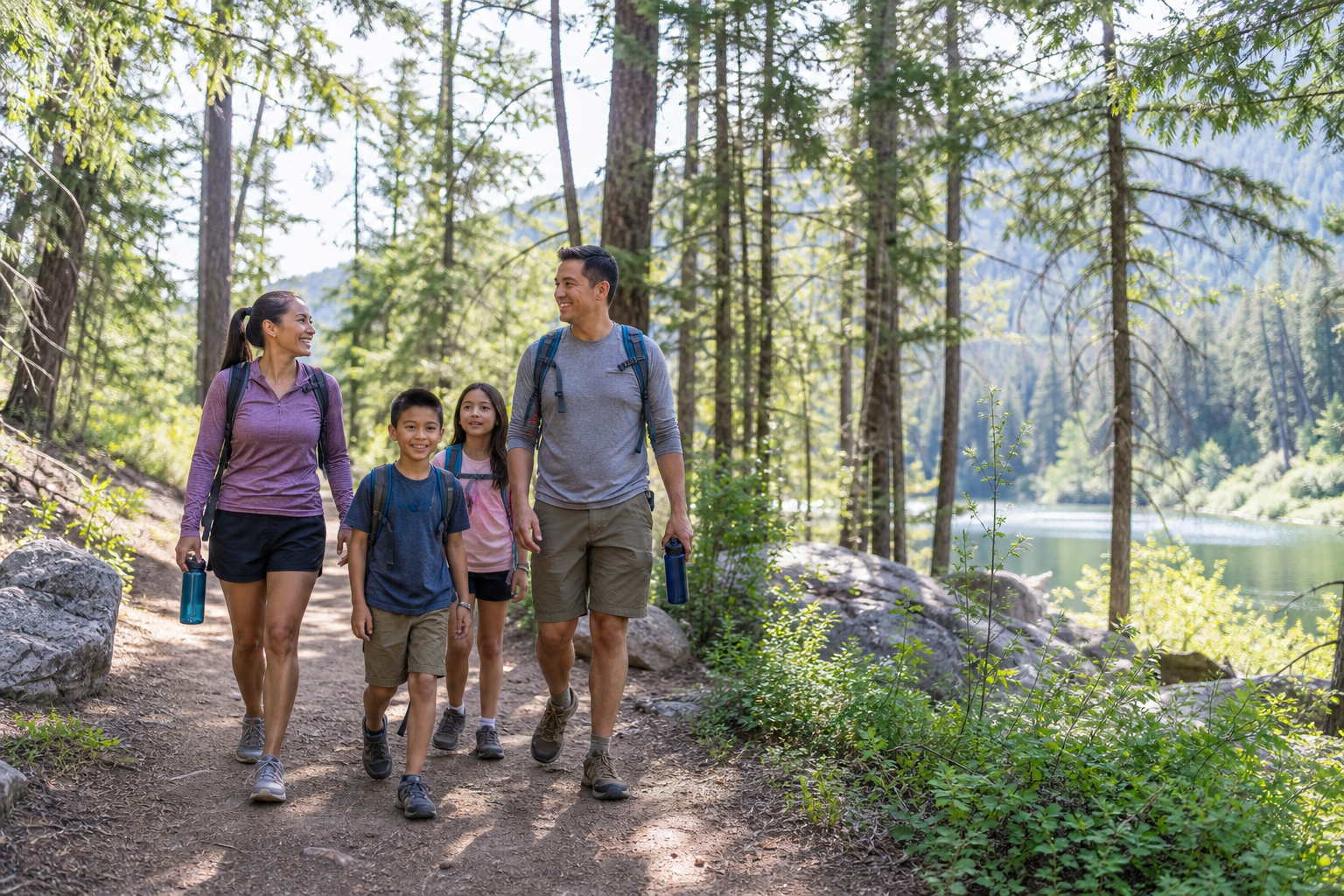
Saturday is the big day. Balance activity with rest.
7:00-8:30 AM: Breakfast
- Campfire pancakes, breakfast burritos, or scrambled eggs on the camp stove. Make coffee first. Nobody functions well before coffee.
8:30-11:30 AM: Morning Activity
- This is the best window for a hike, a bike ride, or a trip to a nearby attraction. Mornings are cooler and kids have the most energy. Pack water and snacks.
11:30 AM-1:00 PM: Lunch
- Keep lunch simple: sandwiches, wraps, fruit, chips, and juice boxes. Eat at the campsite or at a picnic area if you are out exploring.
1:00-4:00 PM: Afternoon Downtime + Swimming
- Pool time, lake time, or unstructured play at the campground. This is the “unstructured” block where kids swim, ride bikes, play at the playground, and explore. Adults sit in camp chairs and read. Reapply sunscreen every two hours.
4:00-5:00 PM: Quiet Time
- Return to the campsite. Rest, shower, or play a board game. Let everyone decompress before dinner and the evening campfire.
5:00-7:00 PM: Dinner
- Saturday dinner is the “big meal” of the weekend. Foil packets on the fire, campfire skewers, grilled chicken, or a one-pot chili. Involve the kids in prep.
7:00-9:00 PM: Campfire and Evening Activities
- S’mores, campfire stories, stargazing, flashlight tag, or a themed weekend event if available. This is the highlight of the camping weekend for most families.
9:00 PM: Wind Down
- Bedtime routine. Extinguish the campfire fully using the drown-stir-feel method. Secure food in the cooler or car (not in the tent).
Sunday: Pack-Up and Departure
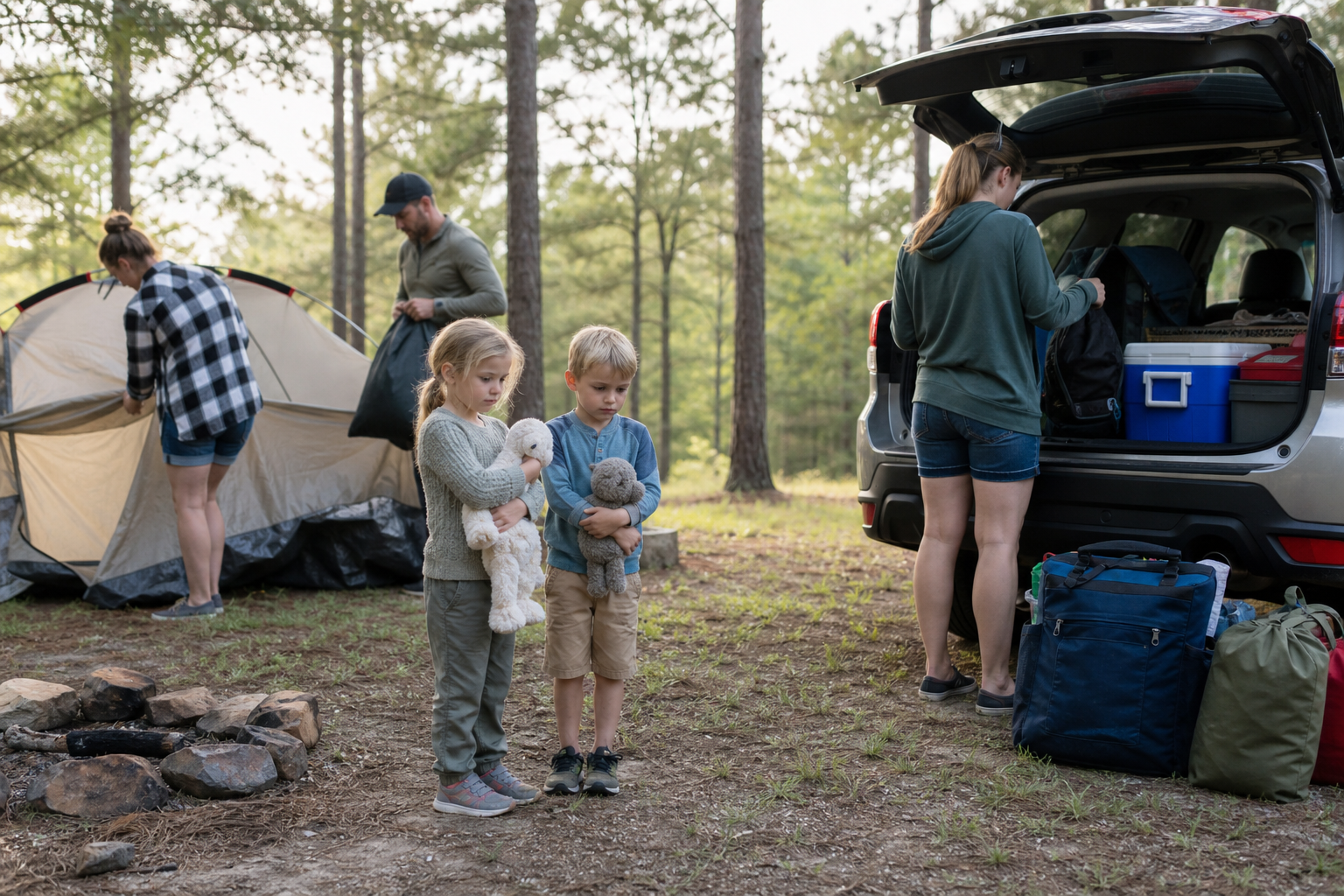
Sunday morning is about a calm departure, not a rushed one.
7:00-8:30 AM: Breakfast
- Use up perishables. Eggs, remaining fruit, and whatever needs to be eaten before the cooler gets packed up. Cook on the camp stove. Do not build a new fire.
8:30-10:00 AM: Clean Up and Pack
- Pack sleeping gear first. Roll sleeping bags, deflate pads, and break down the tent while kids finish breakfast.
- Pack kitchen gear second. Wash dishes, dry and pack cookware, empty and wipe down the cooler.
- Leave no trace. Walk the campsite and pick up every piece of trash, food scrap, and bottle cap. Leave the site cleaner than you found it.
- Check the fire ring. Make sure ashes from last night’s fire are cold. If they are not, douse with water.
- Final walk-through. Check behind trees, under picnic tables, and inside the tent footprint. Socks, shoes, and water bottles are the most commonly forgotten items.
10:00-10:30 AM: Depart
- Return keys or check out at the campground office if required. Thank the staff.
- While the car is loading, let kids have one last run around the campground to burn energy before the drive.
Age-Specific Packing Add-Ons
Baby/Toddler (0-3)
- Portable crib or travel bassinet
- Baby monitor (battery-powered)
- High chair or clip-on seat
- Baby carrier or backpack
- Extra diapers (pack double your normal daily count)
- Familiar blanket and comfort item
School-Age (4-10)
- Bike and helmet
- Nature journal and colored pencils
- Bug-catching kit (magnifying glass, container)
- Glow sticks for nighttime
- Card games they can play with siblings
Tweens/Teens (11+)
- Their own flashlight and headlamp
- A book or e-reader
- Fishing gear
- Camera (disposable or digital)
- Independence to explore the campground within set boundaries
Printable Weekend Timeline and Packing List
Download the printable version of this checklist, including both the packing list and the day-by-day weekend timeline.
FAQs
What should I pack for a family camping weekend in New England?
A tent or RV setup, sleeping bags rated for cool New England nights, layered clothing, rain gear, a camp kitchen kit, sunscreen, bug spray, a first aid kit, and campfire supplies. See the full master packing list above for a complete breakdown by category.
How do I keep kids entertained at a campground all weekend?
Balance structured activities (hikes, swimming, themed weekend events) with unstructured play time (bikes, playground, exploration). Bring board games, a frisbee, and coloring supplies for downtime. Happy Grounds campgrounds also host organized activities and themed weekends.
What is the easiest dinner to cook at a campsite?
Friday arrival dinner should be your simplest: pre-made sandwiches, hot dogs, or a one-pot meal prepped at home. Saturday dinner can be more involved with foil packets, campfire skewers, or grilled meats. Keep lunch simple with no-cook options.
How early should I book a campground for a weekend trip?
Book at least 4-6 weeks in advance for summer weekends. Themed event weekends (Christmas in July, Halloweekend) at Happy Grounds campgrounds fill up faster, so book as soon as dates are announced.
What do I do if it rains during our camping weekend?
Switch to indoor and covered activities: board games, card games, rec hall visits, arts and crafts, or a movie on a tablet in the tent or RV. Happy Grounds campgrounds like White Pines in Barkhamsted, CT and Peaceful Pines in Templeton, MA have rec halls for rainy days.
How do I pack up a campsite efficiently on Sunday morning?
Pack in reverse order of setup: sleeping gear first, kitchen second, campsite last. Do a full walk-through before leaving to check behind trees, under tables, and around the fire ring. Leave the site cleaner than you found it.
A family camping weekend works best when the planning happens at home and the relaxing happens at the campground. This checklist handles the planning part so your family can focus on the campfire, the pool, the hikes, and the moments that make camping worth coming back for.
Contact Happy Grounds to book your family camping weekend, or visit camphappygrounds.com to explore campground locations across New England and New York.