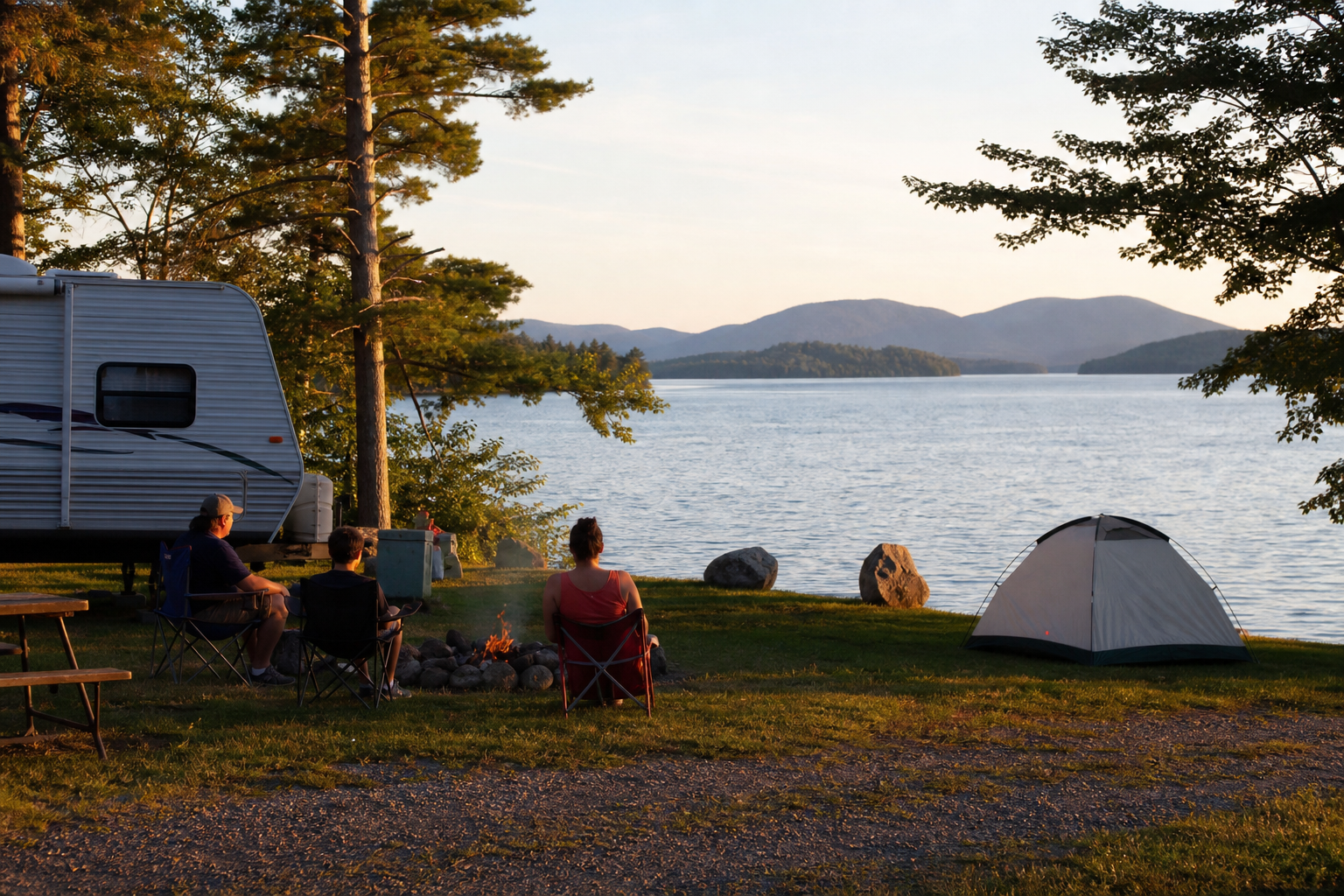

You leave work late on Friday, set up in the dark, spend Saturday catching up on chores you meant to do at home, and then break camp Sunday morning. Two nights disappear fast. A three-night or holiday weekend changes the math completely. You get one full unhurried day in the middle, which is where the swimming, the hiking, the card games, and the long campfire conversations actually live.
The catch is that a longer weekend needs a real plan. More days means more meals, more weather variance, and much tighter site availability across New England and New York. Below is the framework we watch families use well: when to book, how to pick the location, what a Friday to Monday rhythm looks like, and how to keep a rainy afternoon from wrecking the whole thing.
Ready to hold your dates? Browse the Happy Grounds campground locations and call (508) 519-3200 to talk through site types and availability for your weekend.
Start With the Weekend, Not the Destination
Most trips fall apart because the dates get chosen last. Flip it. Put the weekend on the calendar first, then find the campground that fits it.
Ask three questions before anything else:
- Which weekend are you actually taking? A holiday weekend, a school in-service Friday, or a personal day tacked onto a normal weekend all work. Write the exact dates down.
- When can you realistically arrive? Friday at 3 p.m. and Friday at 8 p.m. produce two very different first nights.
- Who is coming? Two adults and a toddler need a different site than three families with teenagers and two dogs.
Those answers narrow your options faster than scrolling photos. A group with a dog, a tent, and a late Friday arrival needs a campground with tent sites, a pet policy that works, and an easy drive. That is a short list, not an endless one.
Your Booking Timeline
Long weekends are the first dates to fill, especially summer holidays and peak fall foliage weekends in the mountains. Working backward from your arrival keeps you ahead of everyone still deciding.
| When | What to do |
|---|---|
| 8 to 12 weeks out | Lock the dates with everyone coming. Shortlist two or three campgrounds. Check what site types each one offers. |
| 6 to 8 weeks out | Call and book. Confirm site type, length limits for your rig, and the cancellation terms in writing. |
| 3 to 4 weeks out | Confirm who is bringing what. Assign meals. Reserve any rentals or activities that need a separate booking. |
| 1 week out | Check the extended forecast. Build the rain backup. Do your grocery list and prep. |
| 2 days out | Load the vehicle. Charge everything. Confirm your arrival window with the campground. |
Book earlier than feels necessary for holiday weekends. Availability on a three-night hold is scarcer than on a two-night stay, because one booking takes the site out of circulation for the whole weekend.
Before you finalize, check the current Happy Grounds deals page, since eligible offers apply automatically at checkout.
Choosing the Right Location for Three Nights
For a two-night trip, drive time barely matters. For three nights, the wrong choice compounds. Use plain criteria instead of ranking campgrounds against each other.
Drive time. Keep Friday driving under about two to three hours if you can. Every extra hour comes out of your first evening.
Site type. Match the site to your setup, not the other way around. Some Happy Grounds locations are RV-only, some welcome tents and pop-ups, and some offer cabins or other lodging. Field & Stream in Brookline, NH is RVs only with pop-ups welcome, while White Pines in Barkhamsted, CT lists RV, tent, cabin, and yurt options. Check the location page before you assume.
Electrical service. If you are running a rig with air conditioning, confirm the amp service. Locations differ. Kings Bay in Champlain, NY lists both 30-amp and 50-amp RV sites, while other locations list 30-amp service.
What is nearby. Three nights means you will want one off-site outing. Water, a village center, or a trail network gives Saturday or Sunday an easy anchor. If the Adirondacks are on your list, our guide to family-friendly camping near the Adirondacks is a useful starting point.
Group logistics. Camping with another family? Ask about adjacent sites when you call, not after you arrive.
Compare two or three finalists on those five points and the decision usually makes itself.
A Friday to Monday Sample Schedule
Treat this as a rhythm, not a rulebook. The point is that each day has a different job.
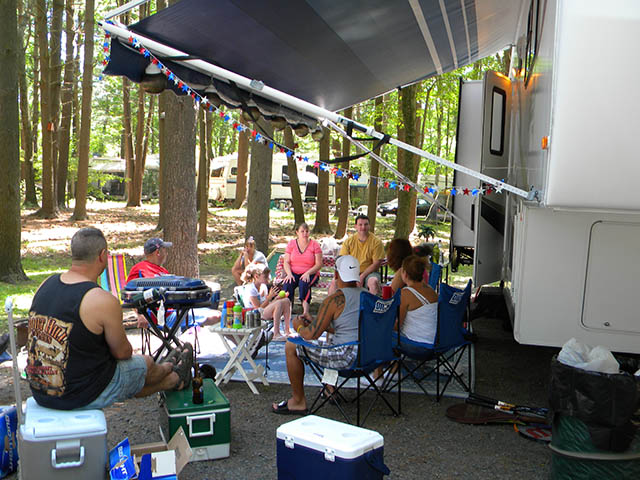
Friday: Arrive and Do Almost Nothing
Arrival day is for setup and one easy meal. That is it.
- Aim to arrive with at least 90 minutes of daylight left.
- Set up in order: level and park, power and water, sleeping space, then everything else.
- Cook something you prepped at home. Chili, pasta, or foil packets beat an ambitious first-night menu every time.
- Keep the first campfire short. You are protecting Saturday.
Saturday: The Big Day
This is the day the long weekend exists for.
- Slow breakfast. Nobody needs to be anywhere.
- Late morning through afternoon: your main activity. Swimming, hiking, biking, fishing, or a trip into town.
- Late afternoon: back at the site for a rest hour. Adults sit, kids play, nobody drives.
- Evening: the real cookout and the long fire. Review our campfire safety checklist for families before you light it, especially with young kids in the group.
Sunday: Stay Close to Camp
Resist the urge to schedule a second big outing. Sunday works best as a campground day.
- Morning: pancakes, coffee, and a slow start.
- Midday: games, a short walk, a nap, or fishing near the site.
- Afternoon: start the quiet pack-down. Clean and stow anything you will not need again. Bag the trash. Charge devices.
- Evening: leftovers night and a final fire.
That Sunday afternoon pack-down is the single best habit for a three-night trip. It turns Monday morning from a scramble into a coffee and a quick sweep.
Monday: Leave Clean and Early
- Breakfast that needs no cooking.
- Break down in reverse order from setup.
- Walk the site twice. Look for tent stakes, dog toys, and stray gear near the fire ring.
- Leave the site cleaner than you found it.
Build the Weather Backup Before You Go
New England and New York weather does whatever it wants. Over three nights, your odds of catching at least one wet stretch go up considerably. Plan for it and it becomes a good afternoon instead of a ruined trip.
- Pack a dry layer per person per day. Damp clothing is what actually ends trips early.
- Bring one shelter upgrade. A canopy over the picnic table changes a rainy weekend more than anything else you can pack.
- Have an indoor plan. A nearby town, a museum, a diner, or a movie theater is worth knowing about in advance.
- Keep an activity bin. Cards, dice, board games, and a book each.
- Watch the overnight lows. Fall camping in the mountains gets cold after dark even when the afternoon felt warm.
For a stretch of indoor ideas that actually hold up with kids, see our post on rainy day camping activities for families.
Meals for Three Nights Without the Chaos
Three nights means roughly nine meals plus snacks. Cooking from scratch every time is how adults end up exhausted.
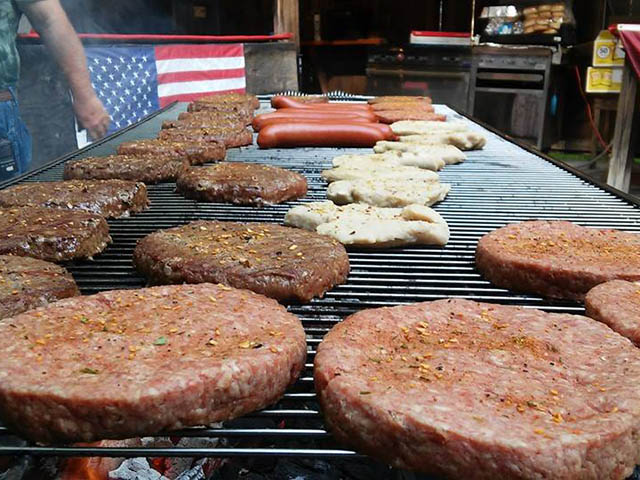
A simple pattern that works:
| Meal | Friday | Saturday | Sunday | Monday |
|---|---|---|---|---|
| Breakfast | n/a | Eggs and bacon | Pancakes | Cereal, fruit, yogurt |
| Lunch | On the road | Sandwiches or wraps | Grazing board | n/a |
| Dinner | Prepped one-pot meal | The cookout | Leftovers plus a fresh side | n/a |
Prep rules worth keeping:
- Chop, marinate, and portion at home. Cooler space is cheaper than campsite counter space.
- Make Saturday the only ambitious meal.
- Plan one deliberate leftovers night. It saves a cooler run.
- Keep a snack bin outside the cooler so it is not opened 40 times a day.
Store food and trash properly overnight. Wildlife habits vary by location, so ask at the office when you check in.
The Arrival and Departure Rhythm That Makes It Work
Long weekends succeed or fail on the edges. The middle takes care of itself.
On arrival: unload only what you need for the first night. Everything else can wait for Saturday morning light. Set your camp chairs out early, because the moment people sit down, the trip has started.
On departure: work in reverse and finish the fire ring last. Do a final walk with one specific job, which is looking at the ground rather than the campsite as a whole.
Between those two edges, protect one block of unscheduled time every single day. Three nights is enough to actually rest, but only if you leave room for it.
What to Pack
Rather than repeating a full list, use our companion piece. Our Family Camping Weekend Checklist is the packing companion to this plan, and the family camping packing checklist for 2026 goes deeper on gear. For a three-night trip, add one extra clothing layer per person, a second tarp, and more coffee than you think you need.
Bringing the dog? Our dog-friendly camping tips cover leash routines, heat management, and what to do about barking at 6 a.m.
Frequently Asked Questions
Q: How far in advance should I book a long camping weekend in New England?
Six to eight weeks ahead is a reasonable target for a standard long weekend. For summer holiday weekends and peak fall foliage dates in Vermont, New Hampshire, and the Adirondacks, book earlier. Three-night holds on popular sites go first.
Q: Is a three-night camping trip better than two nights with kids?
For most families, yes. Two nights means you set up and break camp on consecutive days. A third night gives you one full day where nothing has to be packed or unpacked, which is usually the day everyone remembers.
Q: Which Happy Grounds locations work for tent camping over a long weekend?
Several list tent sites, including Bonnie Brae in Pittsfield, MA, Crown Point in Perkinsville, VT, Gibson Hill in Sterling, CT, and Willowemoc in Livingston Manor, NY. Site types differ by location, so check the location page or call before booking.
Q: What if it rains for most of my weekend?
Bring a canopy for the picnic table, one dry outfit per person per day, and an activity bin. Know one nearby indoor option before you leave home. A wet Sunday with cards under a canopy is still a good day.
Q: Can I camp a long weekend in the shoulder season in New York or Massachusetts?
Yes. Several Happy Grounds locations are open year-round, including Berrys Grove in Tyngsborough, MA, Circle CG in Bellingham, MA, Peaceful Pines in Templeton, MA, and Crows Nest in Newport, NH. Pack warmer layers, since overnight lows drop well below the afternoon high.
Q: How do I plan a camping trip with another family?
Pick the dates together before either family books. Ask about adjacent sites when you call. Split meals by household so each family owns specific meals, and agree in advance on quiet hours and who is watching the kids near the water.
Q: What time should I arrive on Friday?
Early enough to set up in daylight. Aim for at least 90 minutes of light after you park. Confirm the check-in window with the campground when you reserve, since it varies by location.
Book Your Long Weekend
Make room for a few days outdoors. Explore our campgrounds in New York and New England, with locations across New York, Vermont, New Hampshire, Massachusetts, and Connecticut, and find the right spot for your long weekend.
Have questions about site types, electrical hookups, or holiday weekend availability? Contact the Happy Grounds team or call (508) 519-3200 for help choosing a site.
Still planning? Browse the Happy Grounds camping blog for inspiration, then choose your campground and dates to get started.