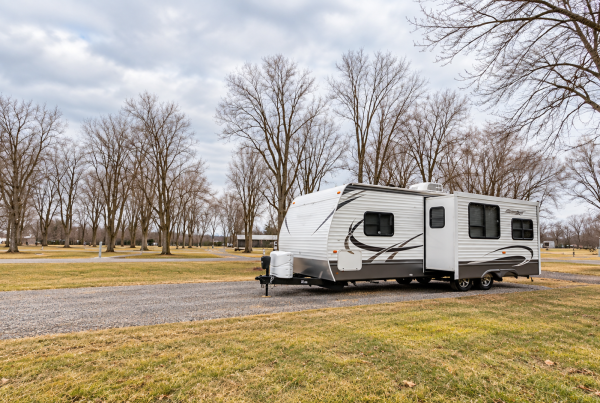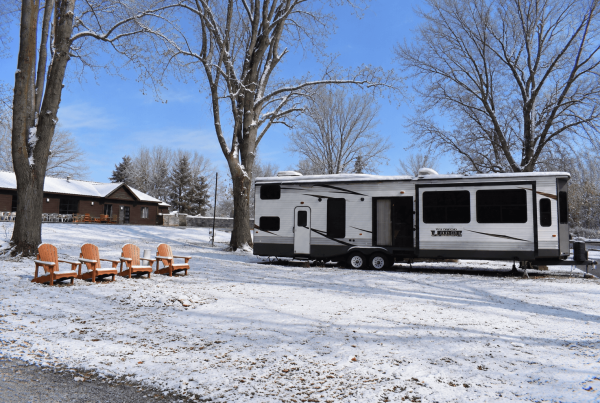


This is the question that stops people from trying winter RV camping: if my RV is winterized, can I still camp in it? The short answer is that winter camping does not mean skipping winterization. It means running a different setup, one built for living in the cold instead of storing through it. Get that setup right and a New York winter is very doable. Get it wrong and you will learn about frozen lines the hard way, usually at 6 AM.
One decision first: where you stay matters as much as how you set up. Riverbend East in Blossvale is open all winter with weekly, monthly, and seasonal stays on Deluxe RV sites. See current winter rates or call (508) 519-3200.
Storage winterization vs. winter camping prep
Storage winterization is about protecting an empty rig: drain the water system, pump antifreeze through the lines, button it up, walk away until spring. Done right, nothing inside freezes because nothing inside holds water.
Winter camping prep is the opposite job. You are keeping water moving, heat running, and the space livable while temperatures sit below freezing for weeks at a stretch. Many full-timers do a hybrid: protect the systems they are not using (an outdoor shower is the classic example) while keeping the core systems live and heated. The mindset shift is the important part: a stored rig’s enemy is trapped water, and a lived-in rig’s enemy is heat loss.
The five things a real winter setup needs
- Skirting. A skirt around the base of your rig traps warmer air underneath and protects tanks and lines from wind chill, which is what actually freezes things. This is the single biggest upgrade for a stationary winter stay, and many parks expect it for seasonal winter guests. Ask about skirt rules and approved materials before you book.
- A water plan. Either a heated fresh-water hose with insulated connections, or filling your onboard tank and using it in stretches. Which works depends on how the park runs water in winter, so ask before you arrive, not after your hose freezes.
- Propane planning. Your furnace burns propane fast in January. Know your tank sizes, your weekly burn rate, and where the nearest refill is before the first cold snap, not during it.
- Tank heaters and insulation. Heated tank pads, an insulated underbelly, and window insulation all stretch your propane and protect your plumbing. Reflectix cut to your windows is cheap and works.
- A moisture routine. Cooking and breathing in a sealed rig creates condensation, and condensation becomes mold. Cracked vents, a small dehumidifier, and a daily window wipe-down keep it under control.
What to ask your winter park
Every park handles winter differently, and the answers change your setup. Ask which utilities run on your site in winter, whether there are skirting rules, how snow removal works, and what the park’s RV condition policy is. At Riverbend East, RVs generally need to be within a 10-year model range, with a quick photo review for older rigs, and tents are not permitted at all.
If you are de-winterizing for a winter trip and re-winterizing after, plan that into your schedule too. Our de-winterizing guide walks through the spring side of the process step by step, and the winter RV camping checklist turns this article into a packing list.
The mistakes that actually freeze pipes
After enough winters, the failure patterns get predictable. Hoses freeze because someone trusted a regular hose on a mild week and a cold snap arrived overnight.
Tanks freeze because the skirt went on ‘next weekend’ until January. Propane runs out on the coldest night because nobody tracked the burn rate in week one. And gray valves get left open until the ice bridge forms. None of these are bad luck; they are all scheduling mistakes, and a checklist fixes every one of them.
The honest verdict
You do not need a four-season RV to winter camp in New York, but you do need a deliberate setup and a park that is actually set up for winter guests. Do those two things and winter camping stops being a stunt and starts being a very affordable way to live in your rig all season.
Want to talk through your rig and your plans? Call (508) 519-3200 and we will tell you honestly whether Riverbend East fits them, or check current winter availability online.
Frequently Asked Questions
Q: Can I camp in my RV in winter if it is winterized?
Not comfortably. Storage winterization drains and protects your water system, which you need live for camping. Winter camping uses a different prep: skirting, a heated hose or tank plan, propane planning, and moisture control.
Q: Do I need skirting for winter RV camping?
For anything longer than a few nights in freezing weather, skirting is the single biggest upgrade you can make. It protects tanks and lines and cuts heat loss. Many parks expect it for seasonal winter stays, so ask about skirt rules when you book.
Q: How much propane will I use in a New York winter?
It depends on your rig, insulation, and how cold it gets, but expect your furnace to be your biggest consumer by far. Track your burn rate for a week, then plan refills ahead of cold snaps.
Q: Is a heated water hose enough for winter camping?
Sometimes, but only if the park keeps water running in winter and your connections are insulated. Many winter campers fill their onboard tank instead. Ask your park how water works in the cold months before you decide.
Q: Are there rules about older RVs at winter parks?
Often, yes. At Riverbend East, RVs should generally be within a 10-year model range, with a photo review for older rigs. Email Riverbend@camphappygrounds.com before booking if yours is older.
Q: When should I de-winterize if I am camping all winter?
If you are living in the rig with water running, you are already de-winterized for the season. If you are doing a short winter trip on a stored rig, de-winterize before and re-winterize after, and plan both steps into your travel days.