

Winter changes the pace of a camping trip. A quiet morning at your site can be the best part of the day, but getting comfortable takes more preparation when darkness arrives early and temperatures fall below freezing. The good news: with the right campground, a properly prepared RV, and a realistic plan, winter camping in the Northeast is not just doable, for a lot of campers it becomes their favorite season.
Start with three decisions: where you can stay, whether your RV or sleeping setup suits the conditions, and what you will do if the weather changes. A campground being open does not automatically mean every site, water connection or recreational facility is available, so this guide walks through each decision in order.
This guide focuses on developed campgrounds and RV stays across New England and New York. Tent campers should confirm that winter tent camping is permitted and have equipment and experience suited to the expected conditions. Backcountry winter travel requires a separate level of preparation that is beyond the scope of this article.
Ready to plan a winter stay? Contact Happy Grounds with your dates and RV details, or call (508) 519-3200.
Where can you camp during winter?
Happy Grounds has dedicated winter pages for the twelve locations below across Massachusetts, New Hampshire, New York and Vermont. Use them to explore advertised winter stays, then confirm your dates, equipment and services with the park. A listed offer is not a live guarantee of available sites.
| Campground | Location | Winter information |
|---|---|---|
| Ausable River | Keeseville, NY | Winter at Ausable River |
| Berry’s Grove | Tyngsborough, MA | Winter at Berry’s Grove |
| Bonnie Brae | Pittsfield, MA | Winter at Bonnie Brae |
| Circle CG | Bellingham, MA | Winter at Circle CG |
| Crown Point | Perkinsville, VT | Winter at Crown Point |
| Crow’s Nest | Newport, NH | Winter at Crow’s Nest |
| Field & Stream | Brookline, NH | Winter at Field & Stream |
| Glen-Hudson | Warrensburg, NY | Winter at Glen-Hudson |
| Heritage Acres | Galway, NY | Winter at Heritage Acres |
| Kings Bay | Champlain, NY | Winter at Kings Bay |
| Peaceful Pines | Templeton, MA | Winter at Peaceful Pines |
| Riverbend East | Blossvale, NY | Winter at Riverbend East |
A few starting points if you are not sure where you fit:
- Massachusetts: Berry’s Grove in Tyngsborough advertises year-round operation with a season running into late spring, Circle CG in Bellingham and Peaceful Pines in Templeton offer winter RV categories, and Bonnie Brae in Pittsfield adds a Berkshires option.
- Southern New Hampshire: Field & Stream in Brookline and Crow’s Nest in Newport are both RV-friendly winter options.
- New York: Kings Bay near Lake Champlain, Riverbend East in Blossvale, Ausable River in Keeseville, Glen-Hudson in Warrensburg and Heritage Acres in Galway cover the state from the North Country to the Capital Region.
- Vermont: Crown Point in Perkinsville is the network’s Vermont winter option.
Use each park’s winter page for its inquiry route and request a current quote. Some pages display time-limited offers, so confirm the price rather than relying on an old promotion. For Glen-Hudson, confirm the Warrensburg property and your intended dates directly with the team before applying. Season dates vary by park, most run from October into spring, and at least one park’s advertised season runs into May, so check the exact dates for your park rather than assuming a single season.
Do not use summer photos as a winter amenity list. Pools, beaches, boat access, rental accommodation and activity programs can have different operating schedules from RV sites.
Weekly, monthly or seasonal: choose the right commitment
A shorter stay can help you test your winter setup or plan a limited visit. Monthly stays may suit a longer recreational trip, while a seasonal arrangement may work if you know when and how often you will use the site.
The choices vary by park. Berry’s Grove’s winter page displays monthly and seasonal offers; do not assume a weekly option exists everywhere. Ask what dates the agreement covers, whether you may leave the RV between visits, what is billed separately and what happens if you depart early.
Compare the total charge for the nights you expect to use. A seasonal price is not automatically the lowest-cost choice for your actual visit. Longer agreements also remain subject to the campground’s recreational-use terms, an extended stay should not be treated as permission to use the campground as a permanent address.
![alt text
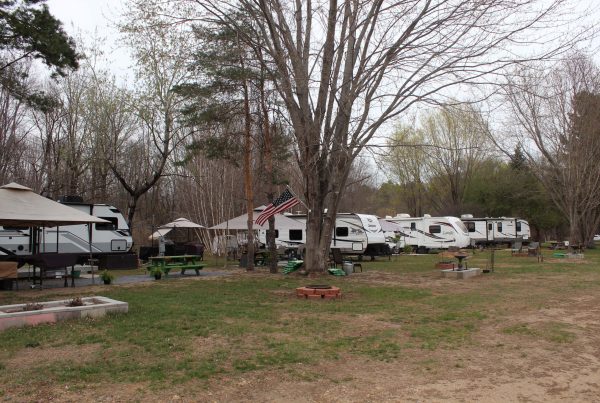
RV campground entrance with parked motorhomes, an American flag, and a wet gravel road lined with autumn trees.
[ IMAGE — RV being prepped for winter: skirting, hose, propane ]
GEENRATE THIS
Generated.
Edit
ALT TEXT
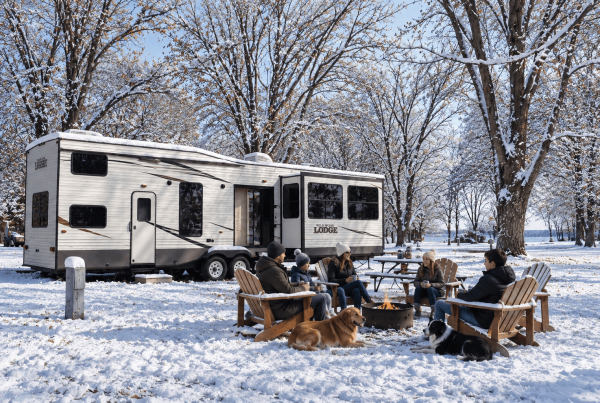
Winter-ready fifth-wheel RV at a snowy campground, with insulated skirting, propane tanks, and a protected water hookup.](https://camphappygrounds.com/wp-content/uploads/2026/09/Winter-Ready-RV-in-a-Quiet-Woodland-Campground.png)
Plan the trip before you pack
Match the stay to your equipment
A winter-ready campground cannot make an unsuitable RV ready for freezing weather. Check your RV manual and ask a qualified RV technician about your furnace, plumbing, batteries, tanks and exposed connections. Describe the conditions you expect and how long you plan to stay.
An RV prepared for winter storage may have drained systems that are not ready for occupied use. Confirm how your particular model should be set up before reconnecting water or operating appliances.
If you are new to cold-weather camping, choose a short trip with a straightforward exit plan. Practice using your equipment before the travel day rather than learning how the heating system works after dark.
Get the important answers in writing
Ask the campground:
- Are you accepting my type of RV or accommodation for these exact dates?
- Is there a minimum stay, application or equipment approval requirement?
- What electrical service is available on the site I would book?
- What are the winter water and wastewater arrangements?
- Which restrooms, showers and laundry facilities will be open?
- Who handles snow clearing on roads and at individual sites?
- What should I do if I arrive late or a storm delays travel?
- What is included in the price, and what is billed separately?
- What are the cancellation and early-departure terms?
Save the reply with your reservation details. A clear answer now is more useful than an assumption at check-in.
Build flexibility into the journey
Check the National Weather Service forecast for your route and destination, then check official road conditions before leaving. Allow time to arrive and set up in daylight. Keep an alternative stop or a delayed departure available if conditions deteriorate.
Tell a trusted person where you are staying and when you expect to arrive. Carry the campground address, site number when assigned, and emergency contacts somewhere accessible without an internet connection. The National Park Service winter planning guidance also emphasizes advance preparation and leaving a trip plan.
Drive for the season
Winter travel in New England and New York means shorter daylight, treated and untreated roads that can change by the hour, and bridges and shaded corners that ice over first. A few habits make the drive safer:
- Check the forecast for your whole route, not just home and destination, conditions in the Berkshires, the Adirondacks or the Green Mountains can differ sharply from the valleys.
- Keep your fuel tank and propane supply comfortably above half so a delay never becomes an emergency.
- Carry a scraper, brush, small shovel, and traction aids, and know how your tow vehicle or motorhome behaves on packed snow before the trip, not during it.
- Slow down and increase following distance. Arriving an hour later than planned is a good outcome; sliding off the road is not.
- If a storm is forecast for your travel day, call the campground and move the reservation. A flexible delay beats a dangerous arrival.
Prepare your RV for an occupied winter stay
Heating
Have the heating system checked before departure. Understand its fuel and electrical requirements, and confirm where you can obtain supplies during the trip. Ask the campground about its current rules before bringing additional heating or generating equipment, and never use outdoor cooking appliances, grills, charcoal, or portable camp stoves, to heat an enclosed space.
Plumbing and freeze protection
Review your manufacturer’s freeze-protection guidance for water lines, tanks and connections. A heated hose alone does not protect every part of the system. Do not improvise plumbing or electrical modifications, and do not assume that a municipal water connection eliminates freezing risk at exposed fittings.
Know how to shut off water and power safely. Keep any approved protective equipment installed according to its instructions. If a connection or component appears damaged, stop using it and ask for qualified help.
Power and batteries
Cold reduces battery performance, and winter stays often mean higher electrical demand from lighting and approved heating accessories. Confirm the amperage of your assigned site before you arrive, understand your RV’s own limits, and avoid daisy-chaining devices that push a circuit past its rating. Keep spare batteries for flashlights, alarms and detectors where you can find them in the dark.
Insulation and moisture
Cooking, breathing and drying wet gear all put moisture into a small space. Follow the RV manufacturer’s ventilation guidance rather than blocking vents to retain heat, those vents are part of the system’s safe operation. Manage condensation by airing the RV briefly on milder days, drying gear in a designated spot, and using window insulation products designed for RV use.
Storage and routine
Plan storage around the daily routine: wet boots near the entrance, dry spare clothes within reach, and emergency supplies accessible without unpacking outdoor compartments. Keep a headlamp or flashlight by the door, winter evenings come early, and a trip to the bathhouse after dark is easier with both hands free.
Winter camping safety measures
Use safe heating and working alarms
Test smoke and carbon monoxide alarms according to their instructions. Never use a grill, charcoal or a portable camp stove to heat an enclosed space. The CDC’s carbon monoxide guidance says portable generators belong outdoors, more than 20 feet from windows, doors and vents. Account for neighboring RVs, too. If the site cannot accommodate safe placement, do not use a portable generator there.
Headache, dizziness, weakness and confusion can indicate carbon monoxide exposure. If an alarm sounds or exposure is suspected, get everyone into fresh air and call 911. Do not remain inside to investigate.
Keep people warm and dry
Pack layers, weather protection and dry replacements. Wet clothing and wind can increase the danger from cold. Keep outdoor plans short enough to return to shelter before anyone becomes exhausted or chilled. Review National Weather Service cold-weather safety advice before traveling.
Know the early warning signs of cold stress: persistent shivering, clumsiness, slurred speech and unusual drowsiness or confusion mean it is time to stop, warm up, and, if symptoms are serious, seek urgent help. Do not treat serious confusion or unusual drowsiness as ordinary tiredness. Children and other vulnerable campers may need closer supervision and more frequent warm-up breaks.
Treat ice and snow as changing conditions
Watch your footing around steps, hoses and walkways. Ask which routes the campground maintains and keep equipment clear of access roads. Stay off frozen water unless the responsible local authority has confirmed access and conditions for the intended activity. A winter recreation photo is not a safety assessment.
Have a way to leave
Before bedtime, check the next forecast and your essential supplies. Decide in advance what would make you leave: failed heating, unsafe access, unavailable essential services or an official evacuation instruction. Identify an alternative place to stay and leave before conditions make the move harder.
Your winter camping checklist
Booking and travel
- Exact dates, location and site type confirmed
- RV dimensions, power needs and equipment requirements provided
- Winter water, wastewater and facility arrangements confirmed
- Price, deposit, cancellation terms and minimum stay understood
- Forecast, road conditions and daylight arrival plan checked
- Reservation, address and contact details saved offline
- Alternative stop and emergency contact arranged
RV and equipment
- Manufacturer’s cold-weather instructions reviewed
- Heating, batteries and essential systems checked
- Required fuel and refill arrangements planned
- Smoke and carbon monoxide alarms tested
- Appropriate, approved freeze-protection equipment prepared
- Lighting, chargers, spare batteries and basic tools packed
- Water and power shutoff locations understood
Clothing and everyday supplies
- Warm layers, waterproof outerwear, boots, hats and gloves
- Spare dry socks and clothing
- Bedding suitable for the sleeping conditions
- Food, drinking water and extra supplies for a delay
- First-aid supplies and routine medications
- Towels, cleaning supplies and bags for wet gear
- Pet supplies and any records the campground requires
On arrival
- Check in and confirm your assigned site
- Report unsafe footing or damaged connections
- Follow the park’s winter hookup instructions
- Locate open facilities and emergency access routes
- Save the after-hours contact procedure
- Check the forecast and supplies again before the first night
What should your first day look like?
Keep the first afternoon simple. Check in, set up carefully and ask questions while the office is available. Find out which facilities are open rather than walking around after dark looking for them.
Once you are comfortable, choose one manageable activity. A winter trip does not need a packed itinerary. Time for a warm meal, dry clothes and a relaxed evening helps make the next morning easier.
For longer stays, establish a routine for supplies, laundry and weather checks. Ask how the office communicates service changes and what to do if you need to extend or shorten the reservation.
Winter camping questions
Q: Does “open year-round” mean I can arrive without a reservation?
No. Site availability, equipment acceptance and minimum stays still apply. Confirm the reservation before traveling.
Q: Can I book a tent site or cabin because a campground offers them in summer?
Not automatically. Ask about the exact accommodation and dates. This guide’s winter listings do not guarantee winter tent or cabin inventory.
Q: Are full hookups enough to make an RV safe in freezing weather?
No. Site services and your RV’s suitability are separate questions. Follow the equipment manufacturer’s instructions and confirm the campground’s winter procedures.
Q: Can I spend the entire winter at a campground?
Ask about the permitted length of stay and applicable terms. An extended recreational stay should not be assumed to permit permanent residency or use of the campground as a primary address.
Q: What does winter camping cost?
Rates are set per park and depend on your site type and length of stay. Each park’s winter page is the right place to start, and a written quote for your exact dates is the only number worth planning around, promotions change and headline rates rarely tell the whole story.
Q: Is winter camping safe for first-timers?
With preparation, yes. Choose a developed campground rather than a remote site, book a shorter stay, prepare your equipment in advance, and keep a realistic exit plan. Most problems in winter camping come from skipped preparation, not from the cold itself.
Find a winter stay that fits
Start with the winter campground options, then contact Happy Grounds with your dates, RV length and utility needs, or call (508) 519-3200. Confirm the details first so you can arrive prepared for the trip you actually booked.